
The annual Rotsler Award, established in 1998 and named for Bill Rotsler (1926-1997), is presented each year for wonder-working with graphic art in amateur publications of the science fiction community. It is sponsored by the Southern California Institute for Fan Interests, carries a $300 honorarium, and is ordinarily announced at Loscon, the Los Angeles science fiction & fantasy convention held over the U.S. Thanksgiving Day weekend in November.
 Bill Rotsler knew everyone and did everything. He went house-hunting with Marilyn Monroe. He wrote science fiction. He sculpted with welded steel rods. He celebrated the West Coast Science Fantasy Conference (better known as Westercon) as his birthday. In the fan community he was best known for graphic art, mostly in the amateur publications by fans, for fans, which we call fanzines (a name coined by Russell Chauvenet in the 1940s.)
Rotsler won the Hugo Award (the highest achievement in the science fiction community) as Best Fan Artist on five separate occasions: in 1975, 1979, 1996 (when he also won the Retrospective Hugo for 1946) and 1997, a remarkable span. His cartoons were deft, his serious drawing fine, his fluency downright breathtaking.
The Rotsler Awards are coordinated for SCIFI by Board member Elizabeth Klein-Lebbink. The current judges are John Hertz, Sue Mason, and Suzanne ‘Suzle’ Tompkins.
Special thanks to Mike Glyer and Craig Miller for biographies of our earliest recipients.
Rotsler Award Winners
Click the year/winner line to open up full details about each winner, including select images by each artist; click on the thumbnails to see larger versions of the illustrations.
All images are used with kind permission of the artist.
Dave Hicks got into fandom in 1980. He kind of dropped out while at art college but came back in the 90s, drawing for his own very occasional, very haphazardly distributed fanzines like Moriarty’s Revenge, Idiosyncrasy and Flipping Heck, then for other editors. He resurrected Jim Barker and Chris Evans’ 1980s character of Elmer T Hack, the worst science fiction writer in the world, for the Hinckley Eastercons. Dave has worked on Novacon for about twenty years and has three Nova Awards for his art work, which was quite awkward because for a brief time he had more Novas than the late, great Peter Weston. He did quite a lot of art for con publications and meanwhile became infamous for scurrilous late-night game shows. He was the “Corflu 50” guest at the Sunnyvale Corflu in 2014. Dave thinks his best work isn’t necessarily the highest quality line work but the images (and words) that are most fun and tell the story of what it’s like being a fanzine fan.


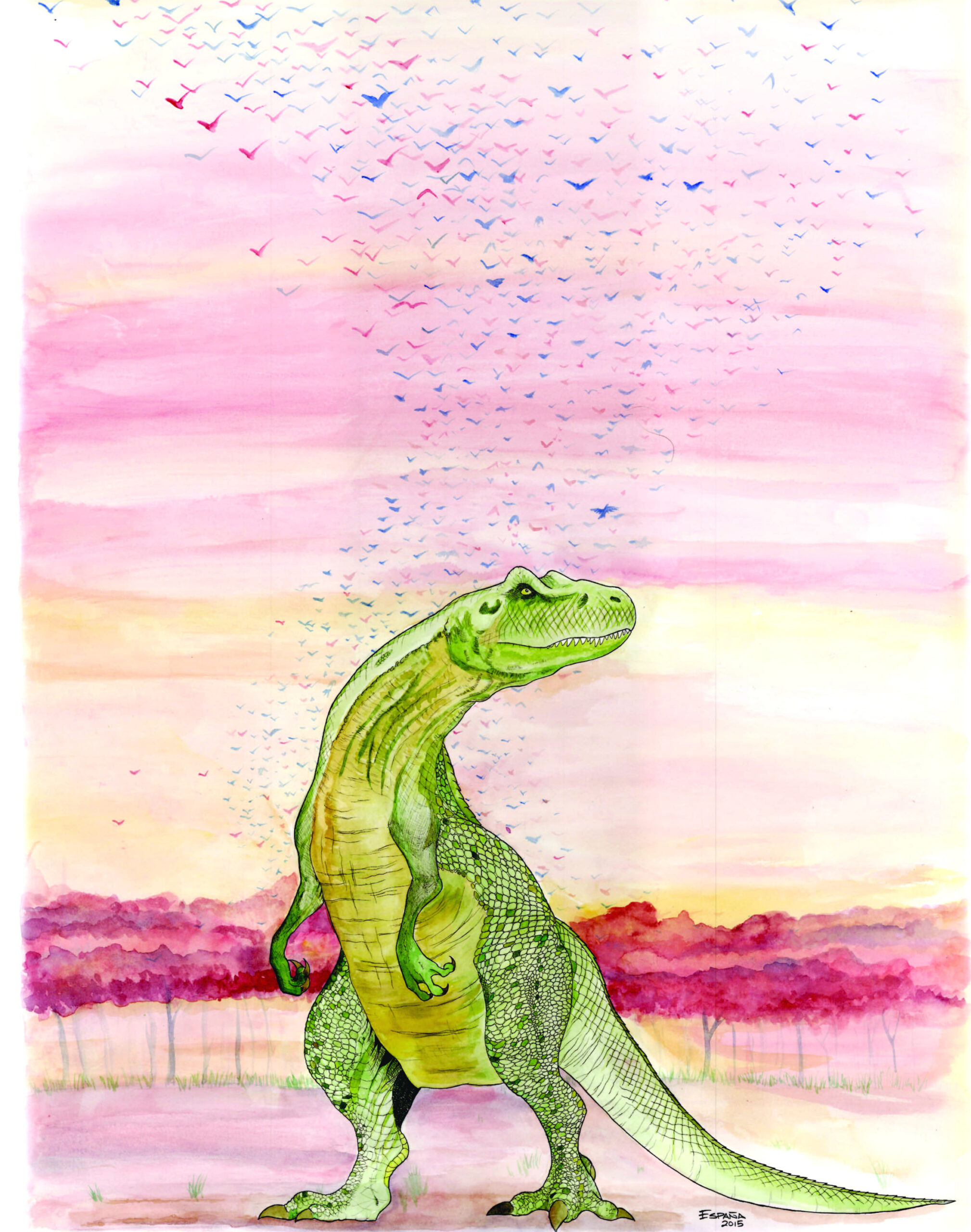
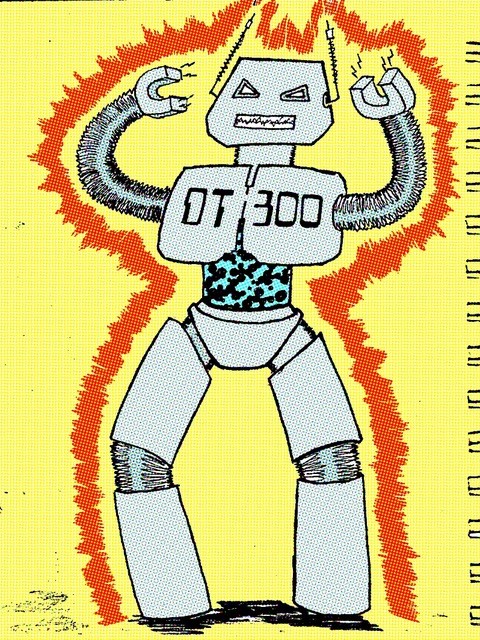
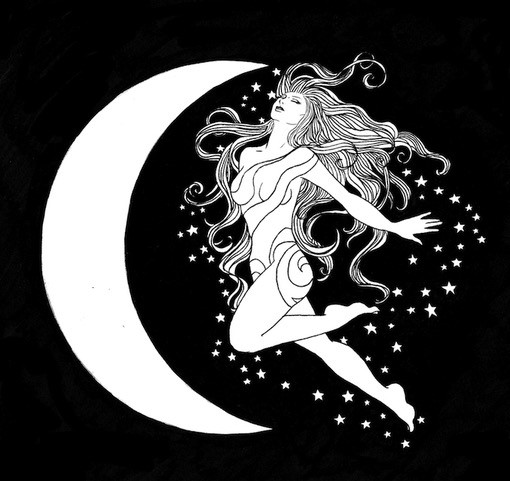
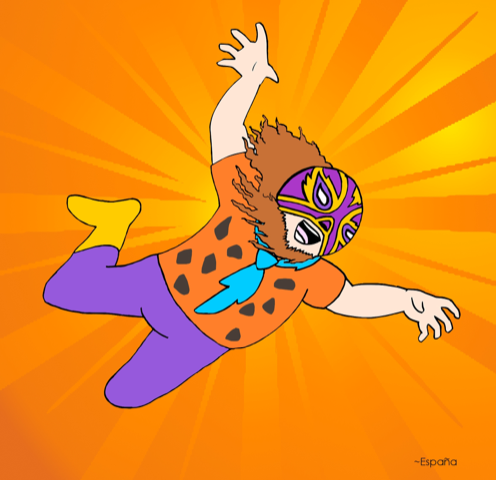
España Sheriff is a fanartist, faneditor and conrunner. Born in Spain of American parents, she moved to the United States in the early 1990s where she first encountered fandom at Confrancisco, the 1993 Worldcon. She later relocated to Newcastle upon Tyne, UK in 2015. She works in ink line art or acrylic paints, and is noted for her hand-painted Spanish fans. You can view many examples on her website, espanasheriff.com.
After volunteering at ConFrancisco, she worked on a number of west coast conventions, helping with art shows and fanzine lounges. She ran the fanzine lounge at Worldcon 75 and the 2017 Worldcon in Helsinki.She was a written and artistic contributor to and later editor of Science Fiction/San Francisco. From 2018 to 2021 she co-edited Lulzine with John Coxon. She was nominated in 2023 and 2024 for the Best Fan Artist Hugo Award.
Her artwork has appeared in conventions artshows, fanzines such as Banana Wings and Vanamonde, and the podcast Octothorpe. She lives in Newcastle with her husband, John Coxon.
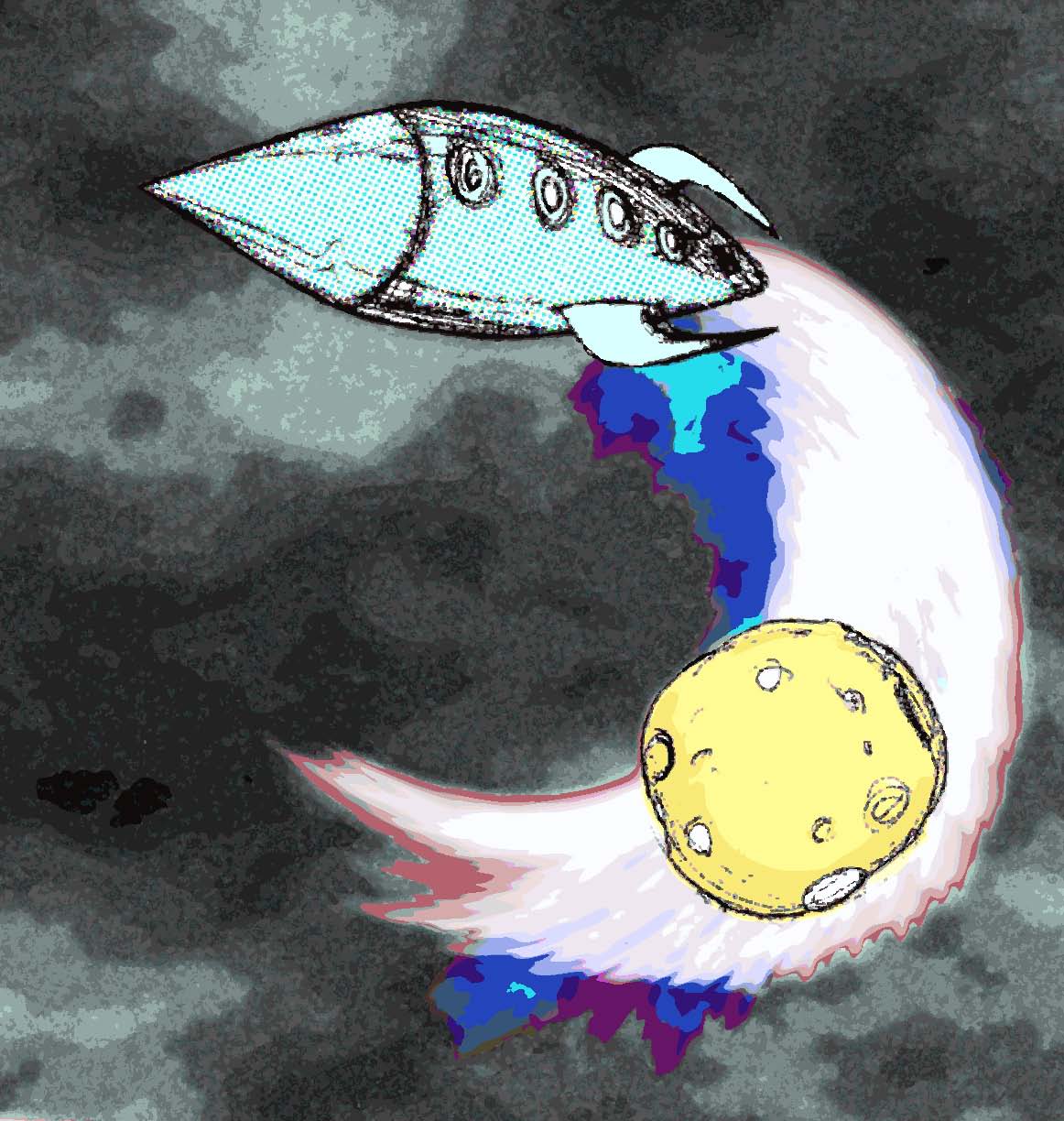
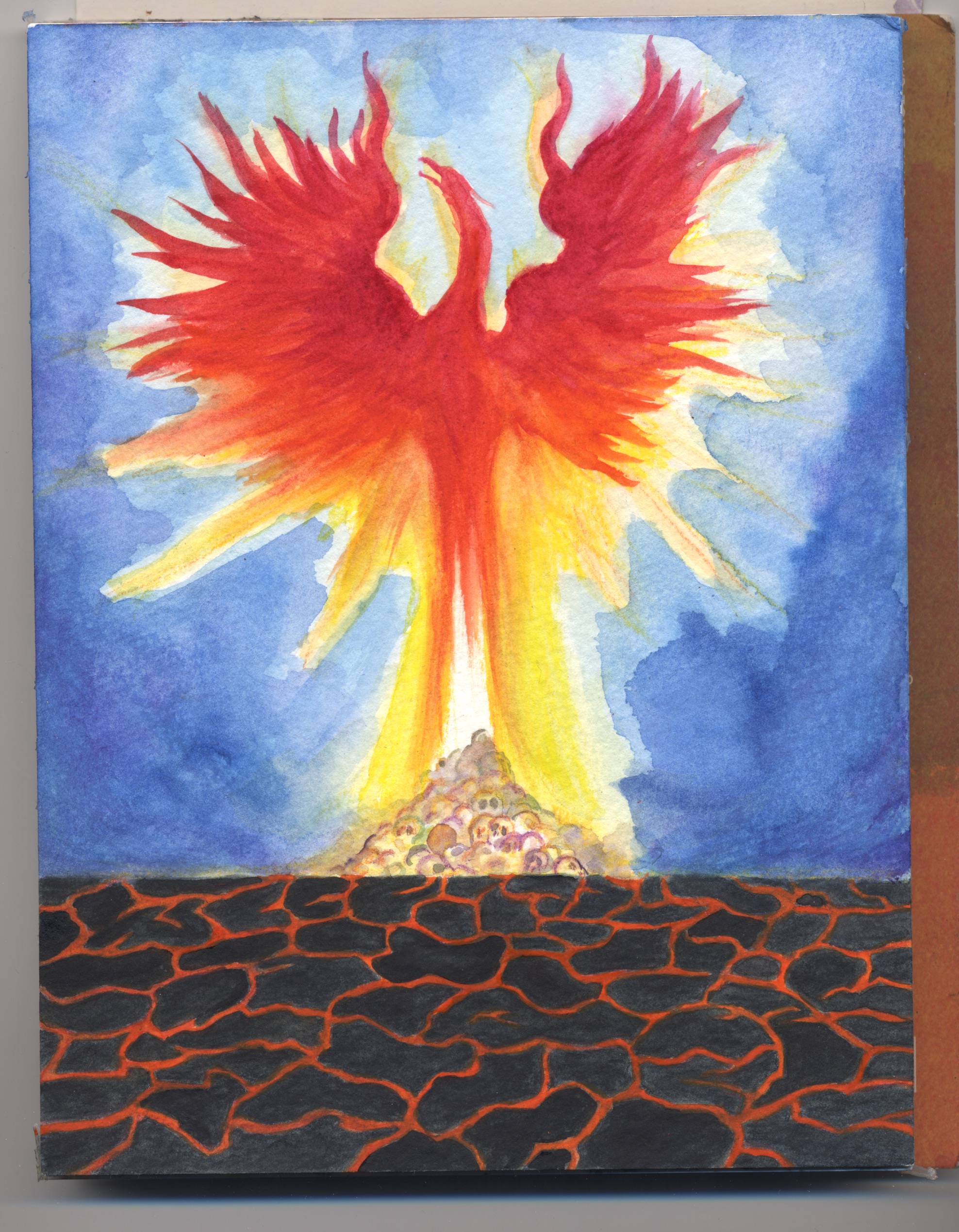
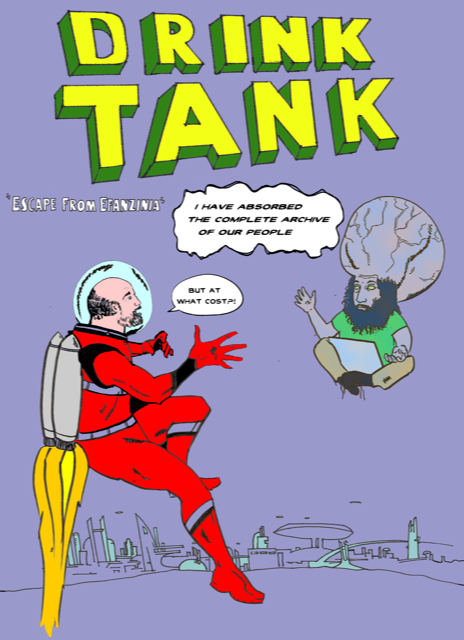
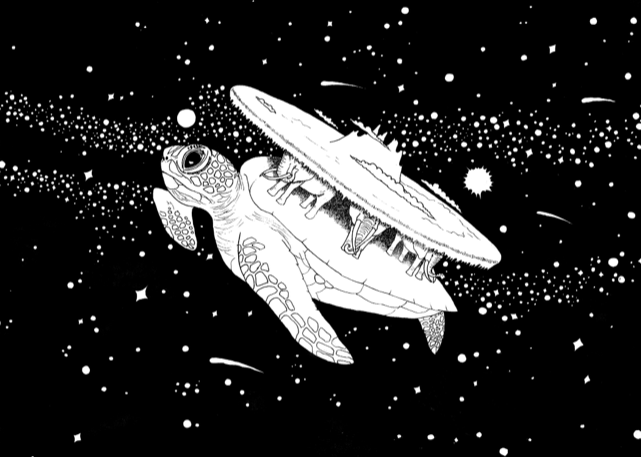
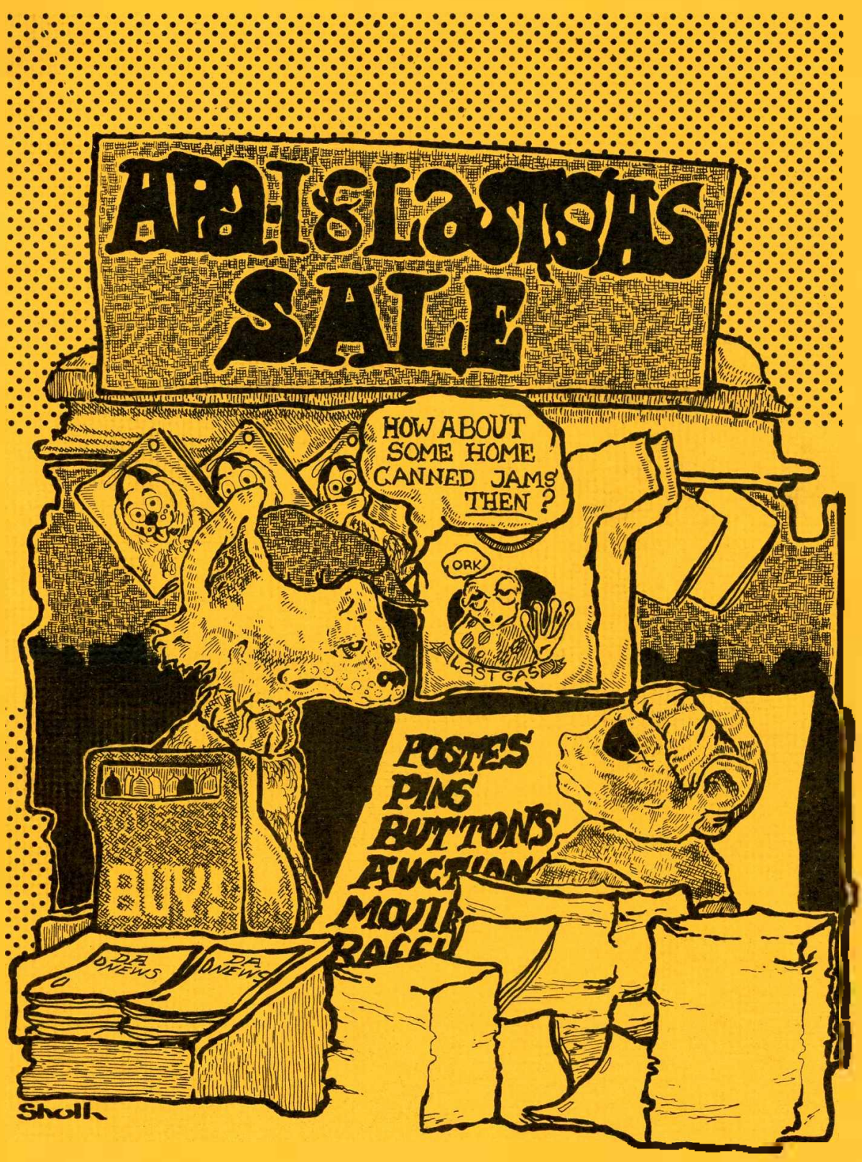
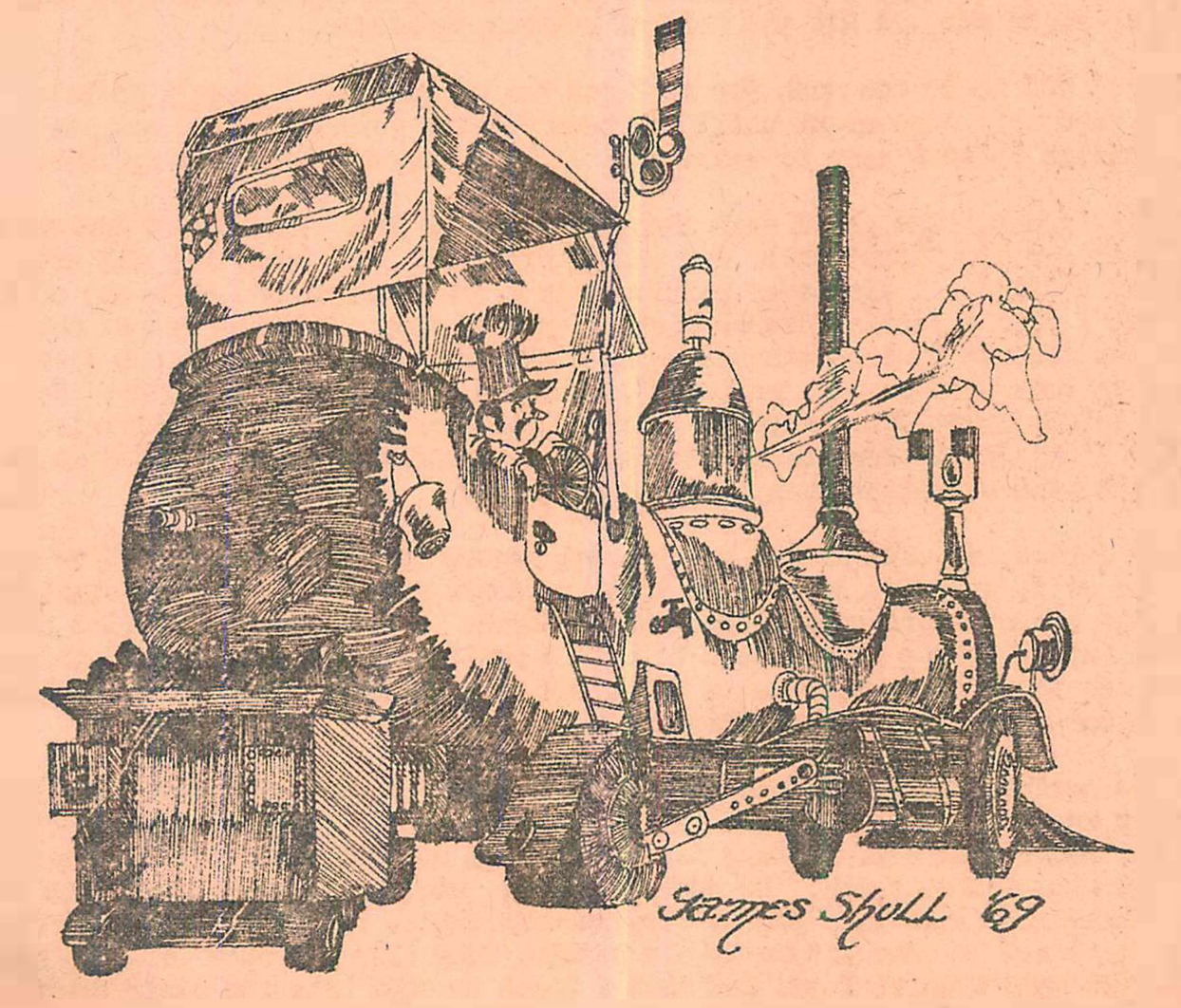
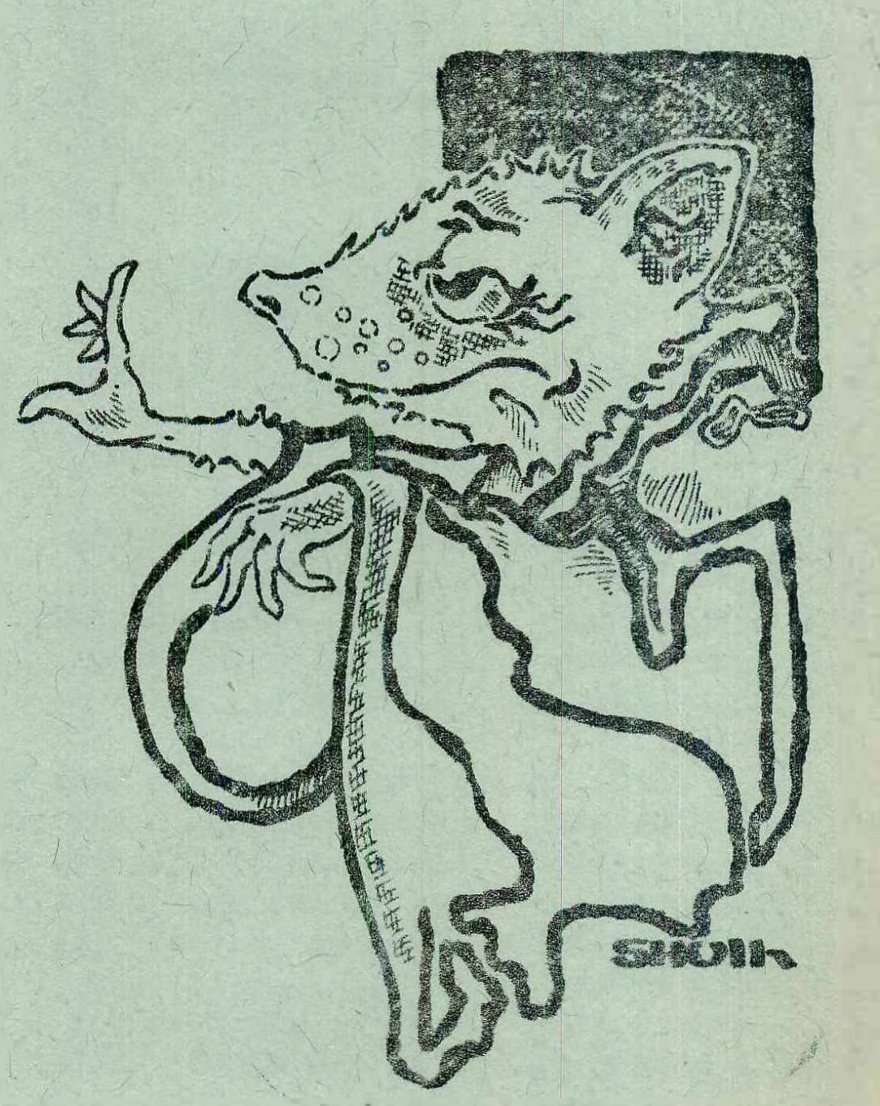
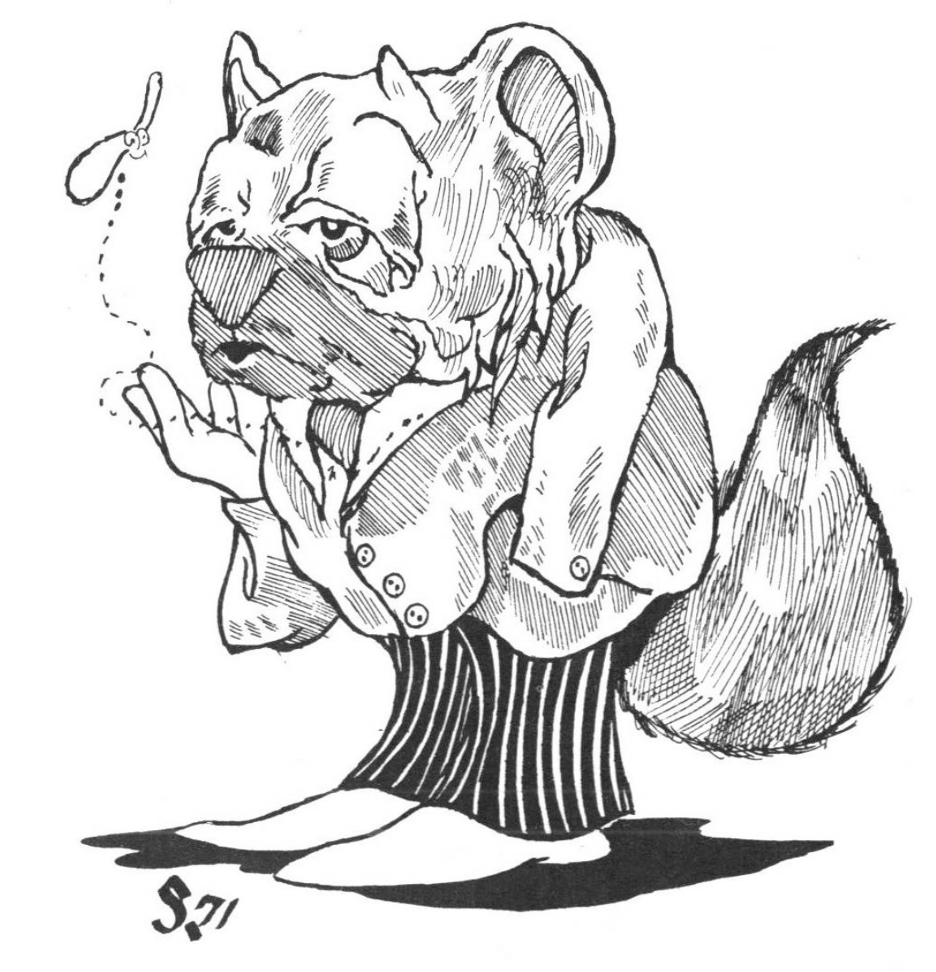
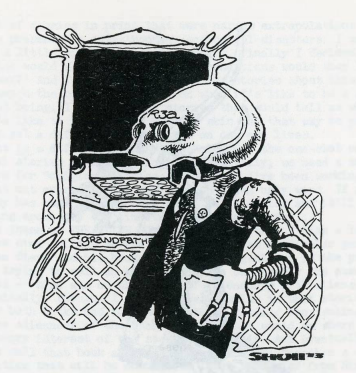
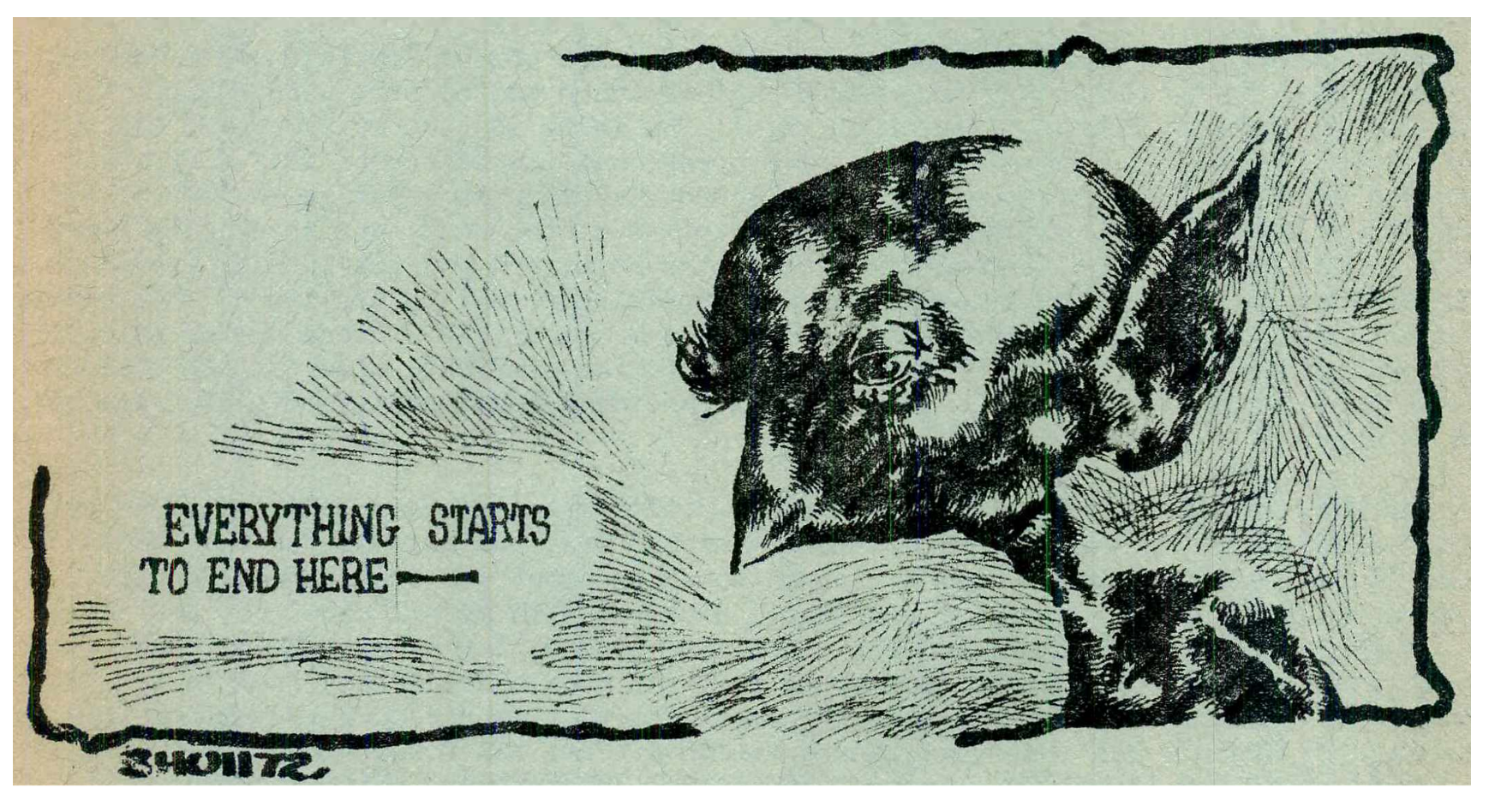
James Shull, a California fan artist, was active in the 1960s and ’70s. His distinctive and well-executed art seemed like it appeared in nearly every major fanzine. He published the fanzine Crifanac and was co-editor of The Essence and a longtime member of CAPA-alpha. He joined LASFS in April 1970. After gafiating in the late ’70s, Shull worked for Marvel Studios and other animation companies, including Disney Imagineering. Jim Shull retired in 2020 from Walt Disney Imagineering after a career spanning 33 years. During those years he was a Creative Director leading projects in Paris, Orlando, California and Shanghai. He continues to be involved in the theme park entertainment industry as a design consultant, podcast contributor, public speaker and writer. Jim draws and has owned cats. He was nominated for the Best Fan Artist Hugo Award in 1973, and 1975 through 1978, as well as the 1975 through 1978 FAAn Awards for Best Artist/Serious. His website is jimhshull.com.
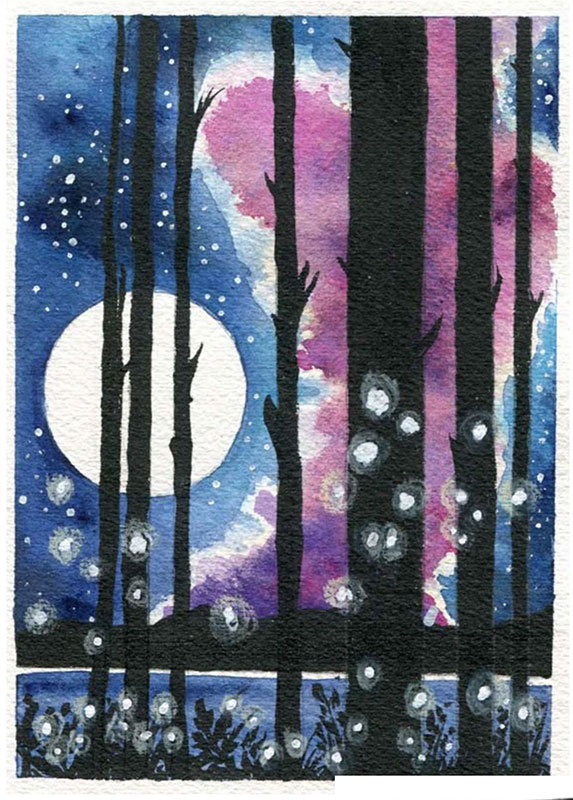
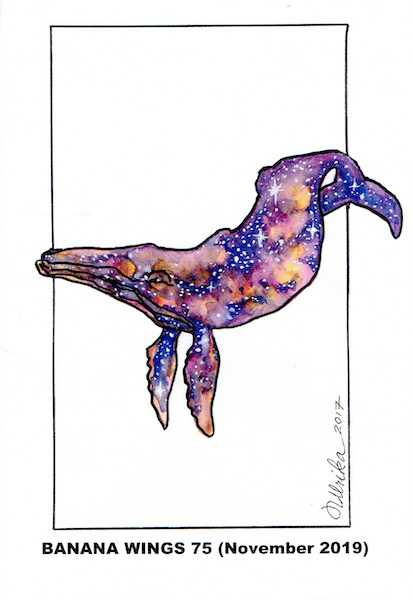
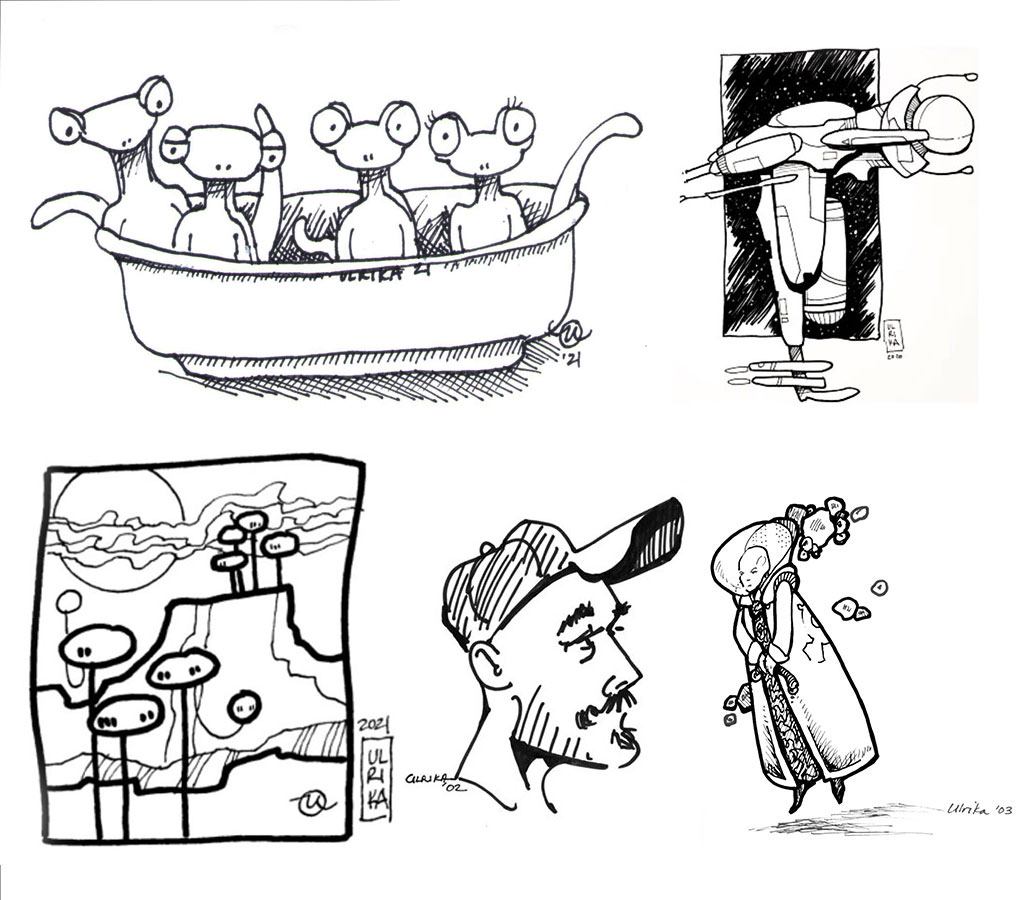
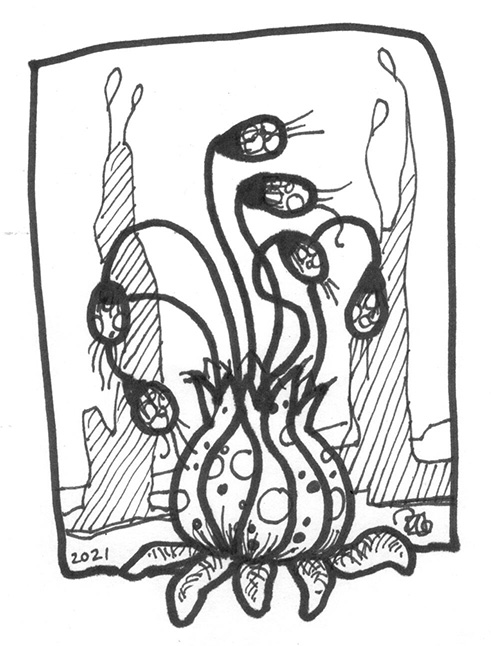
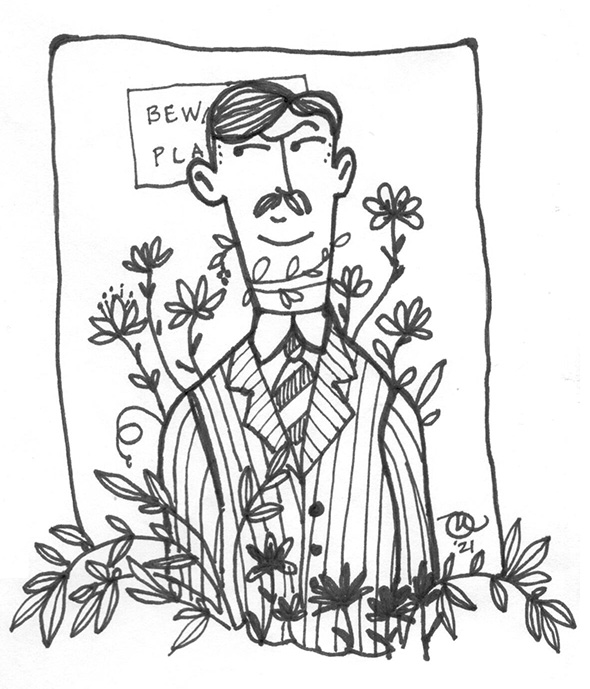
Ulrika Anderson O’Brien is a Seattle-area fanzine fan, fanartist, conrunning fan, “gadfly and curmudgeon.” She uses Akirlu as a fan name and online handle. She chaired Potlatch 15, Potlatch 22, Corflu 39, and Prolog(ue). She was part of the Corflu 26 committee and has worked on numerous regionals and Worldcons. She has been a member of LASFS, Icarus, S.P.E.C.T.R.E and fwa. Her APAs include APA-L, LASFAPA, Myriad and TurboAPA. Born in Sweden, Ulrika immigrated to the U.S. as a child. She’s married to fellow fan Hal O’Brien. – From Fancyclopedia 3






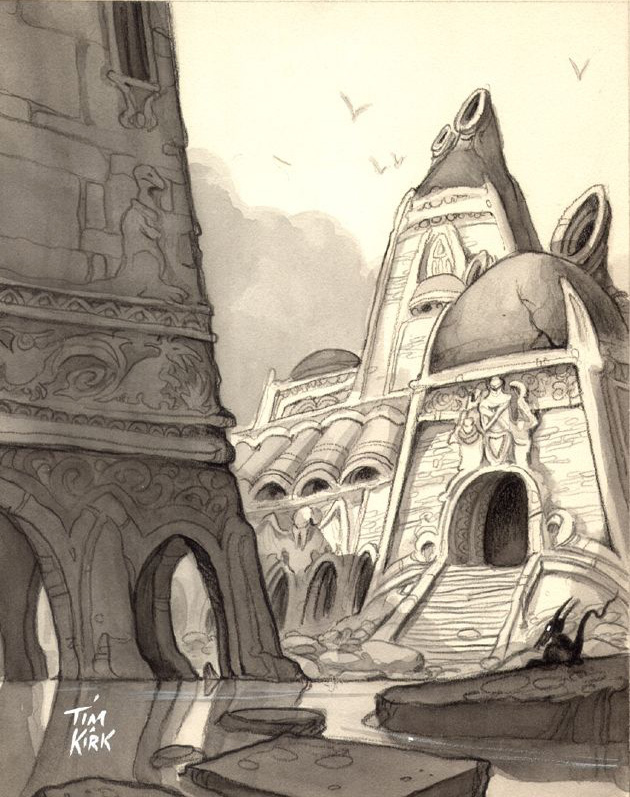
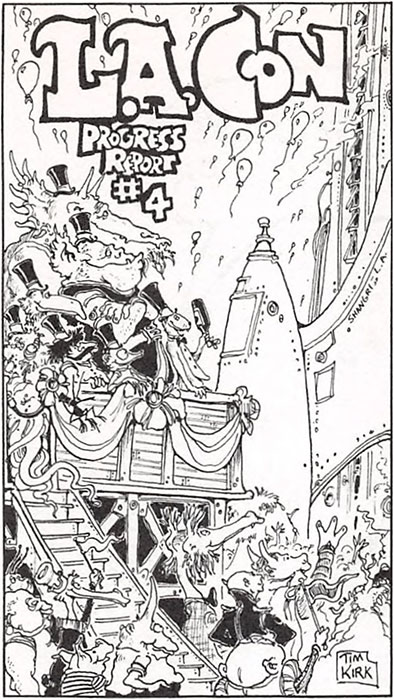
Tim Kirk is a designer and illustrator with wide experience in a broad media spectrum—from theme park and museum exhibit design to book illustration and greeting cards. Tim’s first job out of college was with Hallmark Cards, Inc., where he worked as a greeting card designer. In 1980 he joined the Walt Disney Company as an Imagineer—first as an employee (for 22 years), and currently as a contractor. Tim was also a partner in Kirk Design Incorporated, which designed and produced (among other projects) the Science Fiction Museum and Hall of Fame in Seattle for Paul Allen.
Tim is a five-time winner of the prestigious Hugo Award for science fiction and fantasy fan art. Professionally, he has illustrated stories by L. Sprague de Camp, Lord Dunsany, Robert E. Howard, Darryl Schweitzer, Lin Carter, Mary Elizabeth Counselman, L. Frank Baum, Harlan Ellison, Ray Bradbury and Fritz Leiber. He was the first American artist to illustrate the J.R.R. Tolkien Calendar for Ballantine Books (published in 1975), and more of his Tolkien work is featured in the Greisinger Museum in Switzerland. In 2024, two of Tim’s illustration projects have just been published: The Knight and Knave of Swords by Fritz Leiber from Centipede Press, and The Complete John the Balladeer by Manly Wade Wellman from Haffner Press. Mot recently, Tim illustrated the long awaited The Last Dangerous Visions, edited by Harlan Ellison..
Tim was a principal designer on Tokyo DisneySea and the Disney-MGM Studio Tour theme park for Walt Disney World. He also did design work for the 2003 Walt Disney Pictures production, The Haunted Mansion. Other clients include Thinkwell Design and Production, The Hettema Group, Zeitgeist Design and Production, Rethink Leisure and Entertainment, Henson Associates, the Ronald Reagan Presidential Library, the University of Notre Dame, Ghirardelli Chocolate, the Parsonage of Aimee Semple McPherson (in Los Angeles), the National Tourist Administration of China, The Lotte Group, and the Mini Time Machine of Miniatures in Tucson, Arizona.
Tim is one of the Guests of Honor at LAcon V, the 2026 World Science Fiction Convention, an event sponsored by SCIFI Inc.





Drawing men, women, monsters, and wonders, Alan White was already well-known when he contributed to the 42nd Worldcon’s Program Book; nor has he ceased creating. Recently he has been part of Crazy Las Vegas Fandom. He was Artist Guest of Honor at Loscon 39 (Los Angeles), and won the Fan Activity Achievement (FAAn) Award for Best Artist in 2019. Like other good artists he chooses what will best suit his intentions, and has used line drawings, computer-aided compositions, monochrome, and color in his works.



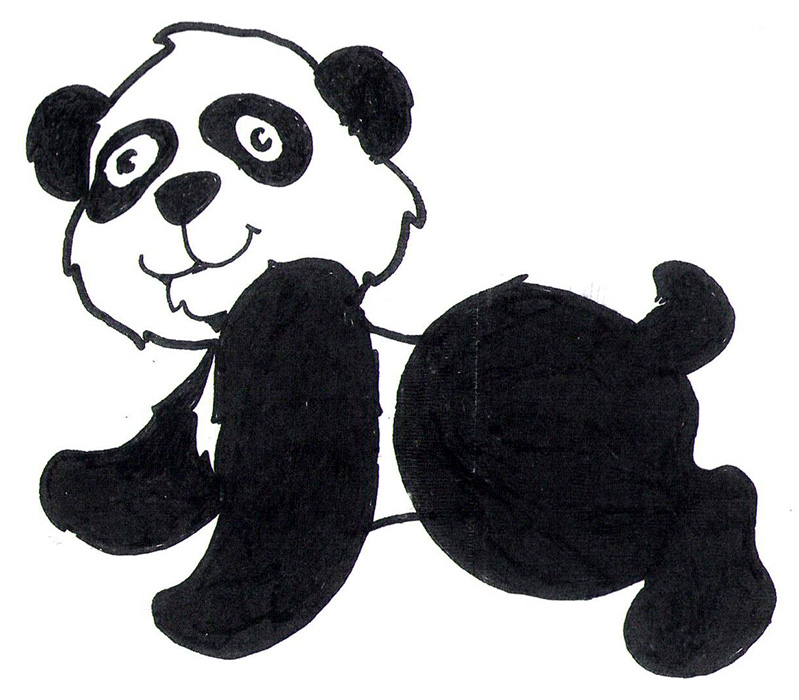
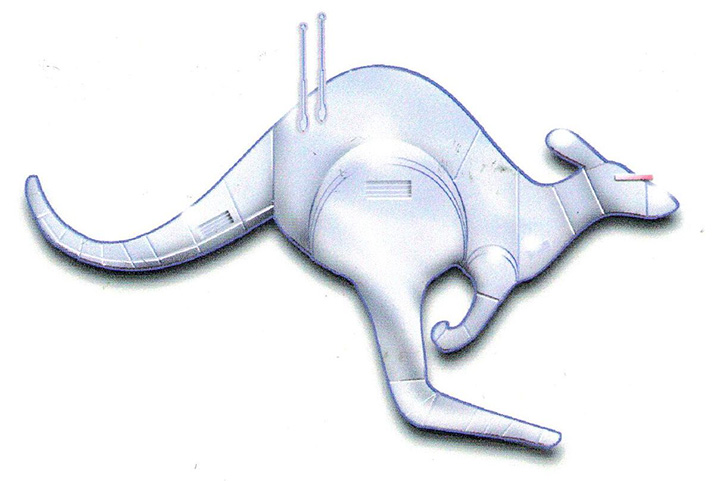


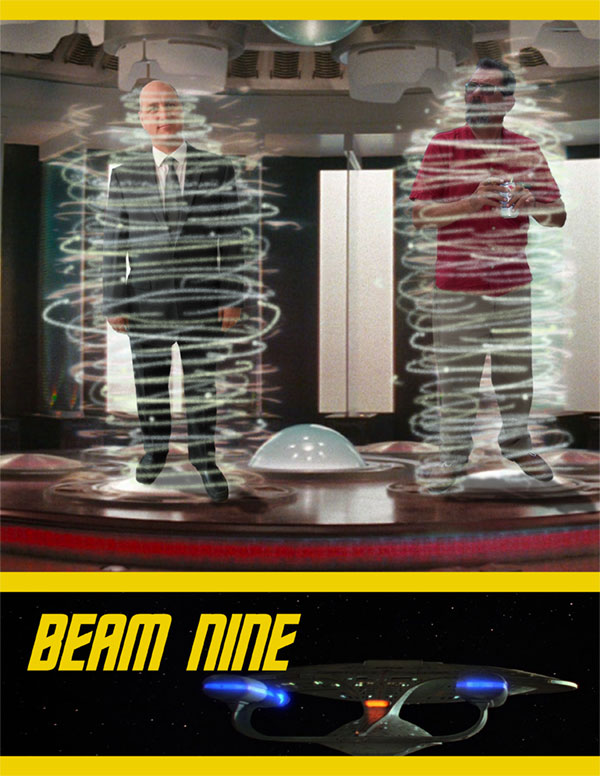
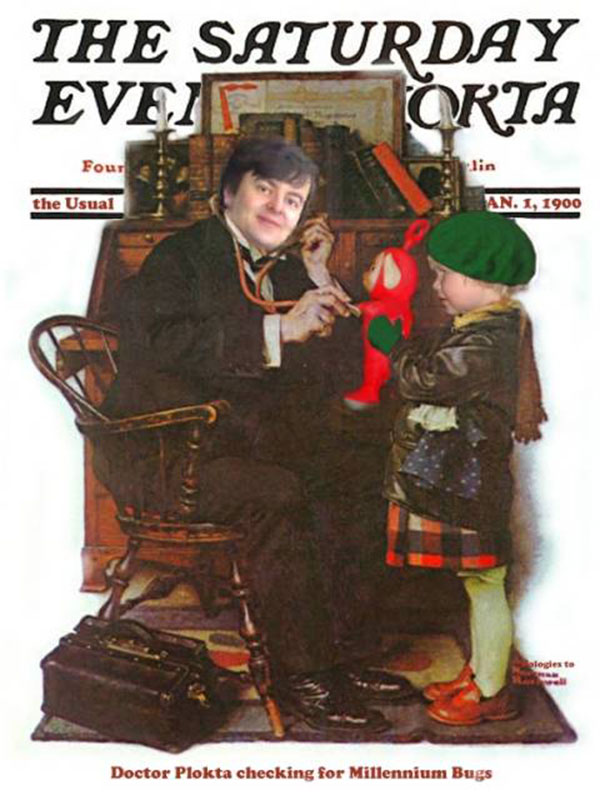
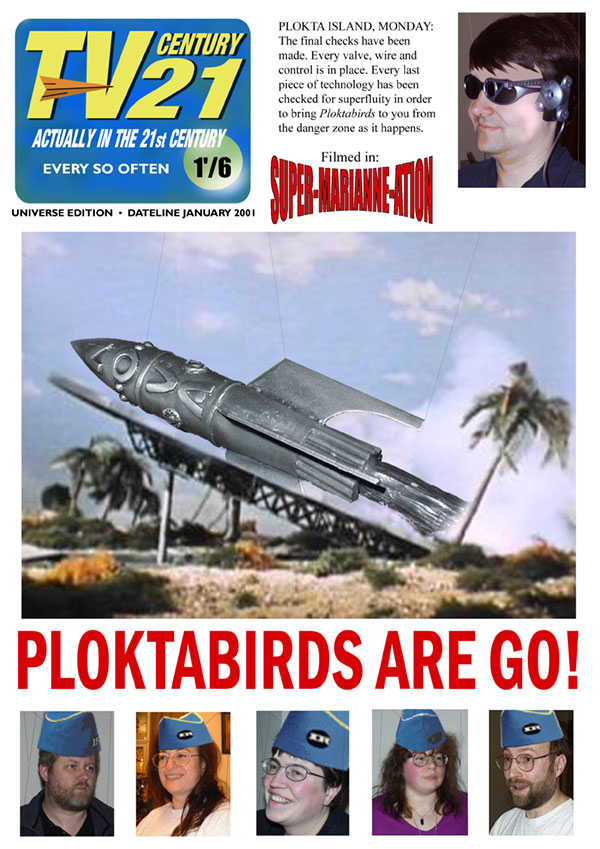
Alison Scott gained renown as layout wizard and cover artist for the British fanzine PLOKTA, “the journal of superfluous technology”, PLOKTA being an acronym for Press Lots Of Keys To Abort; it won two Hugos as Best-Fanzine. Scott won the United Kingdom’s Nova Award as Best Fanartist three times. She chaired the 46th and 69th Eastercon (U.K. national convention, held Easter weekend) and was Fan Guest of Honour at the 71st.




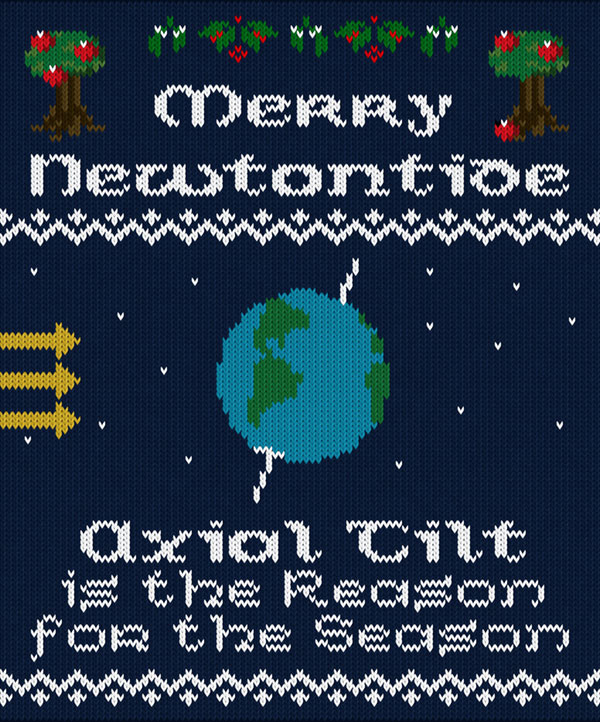
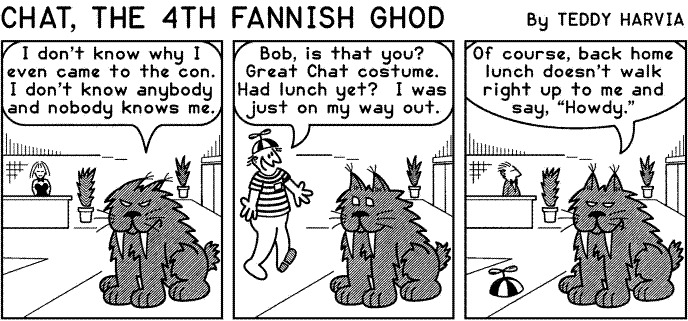
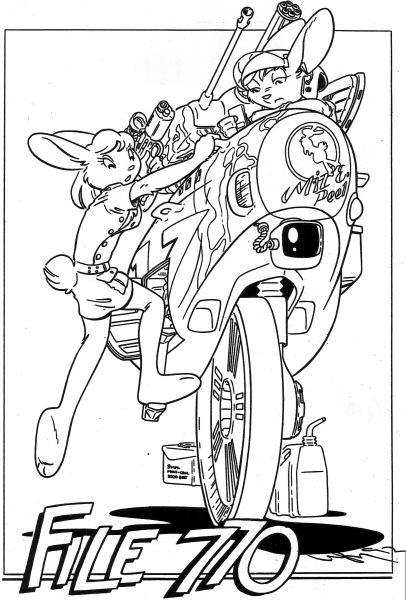
Ken Fletcher’s drawings have long been part of Rune and other amateur publications. In 1966 he co-founded the Minnesota Science Fiction Society (Minn-StF; stf, pronounced “stef”, from Hugo Gernsback’s word scientifiction). By 1976, when he co-founded Vootie, “the Fanzine of the Funny-Animal Liberation Front”, he was known particularly for anthropomorphic cartoons. He and his wife Linda Lounsbury were Down Under Fan Fund (DUFF) delegates, attending the 1979 Australian national SF convention. Science Fiction Five-Yearly, published on time for sixty years, carried the long-running serial !Nissassa by Nalrah Nosille (backward only in that sense), with recent chapters illustrated by Fletcher.


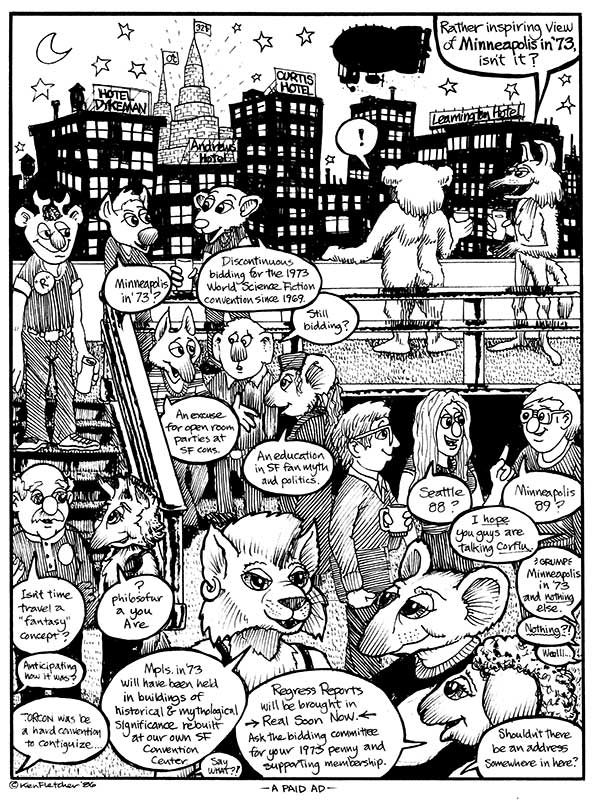

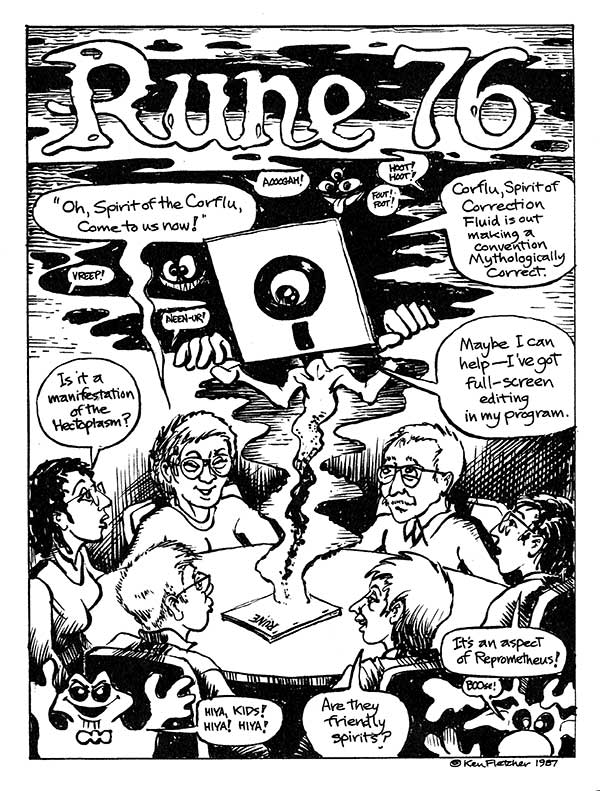
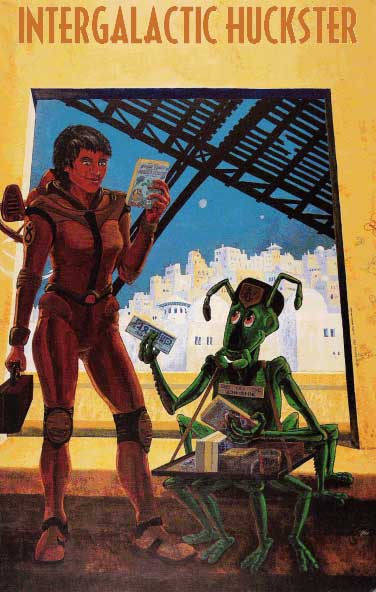



Jeanne Gomoll (“go-MOLL”) created the logographs for the Tiptree Award and the fanziners’ convention Corflu. She did many covers and interiors for Janus, which she co-edited; it won two Fan Activity Achievement Awards and was three times a Hugo finalist for Best Fanzine. She herself has twice been a Hugo finalist for Best Fanartist. In 1987 she was the Trans-Atlantic Fan Fund (TAFF) delegate, attending the 45th Worldcon; she was a Guest of Honour at the 72nd Worldcon (also in the U.K.) and did the covers for its Pocket Programme Guide. She co-founded the feminist SF convention Wiscon and served on the board of its sponsoring organization over four decades.





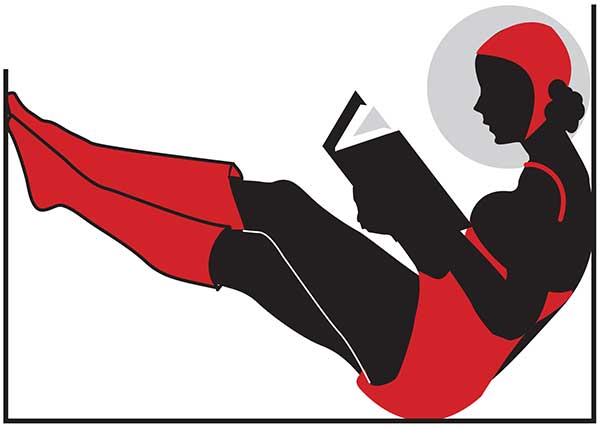

Martin James Ditmar Jenssen, known among fans as “Dick” or “Ditmar,” got his first look at science fiction art (a painting of Saturn by Chesley Bonestell) when he was eight. Immediately his imagination kicked into gear, and he found himself able to visualize variations in the color, the point of view, and other details or hardware. By the time he was a teenager, he was producing art for his friends’ mimeographed fanzines, which involved using a metal stylus to draw on waxed master sheets.
Seeing for the first time Morris Scott Dollens’ black-and-white space and planetary scenes made him want to learn another technique, scraperboard. This was a thin white clay bonded to a cardboard base, which could be covered in India ink, then scraped away with a scalpel to reveal the white underneath. Ditmar’s efforts in this vein were published on the covers of Australian fanzines.
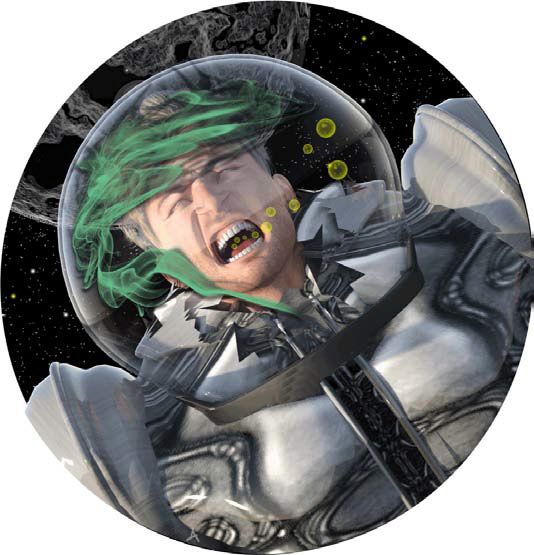
The advent of computers gave Ditmar a new tool for producing exotic color compositions. “Since I usually always wanted to redo what I had created, in order to reorganize the compositional elements, and/or the coloring, and/or the elements themselves, it seemed that graphic packages would be ideal. Software which would allow me to generate three-dimensional objects in a virtual world, to organize their spatial distribution and relations, to color them as I wished, to manipulate them in unreal ways.” And digital and online fanzine publishers, freed from the cost of printing color art on paper, responded with approval, publishing several elaborate folios of these images.


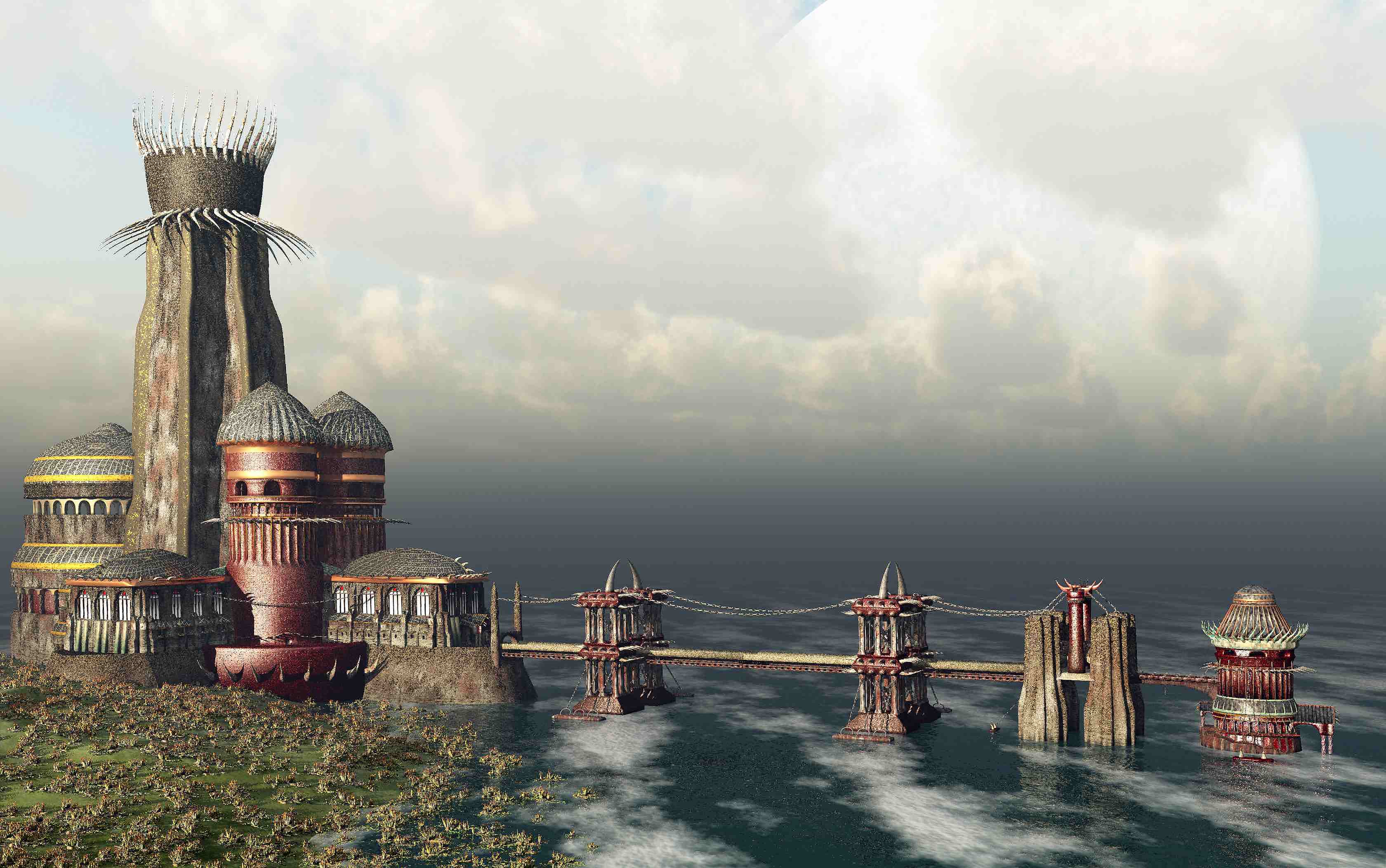
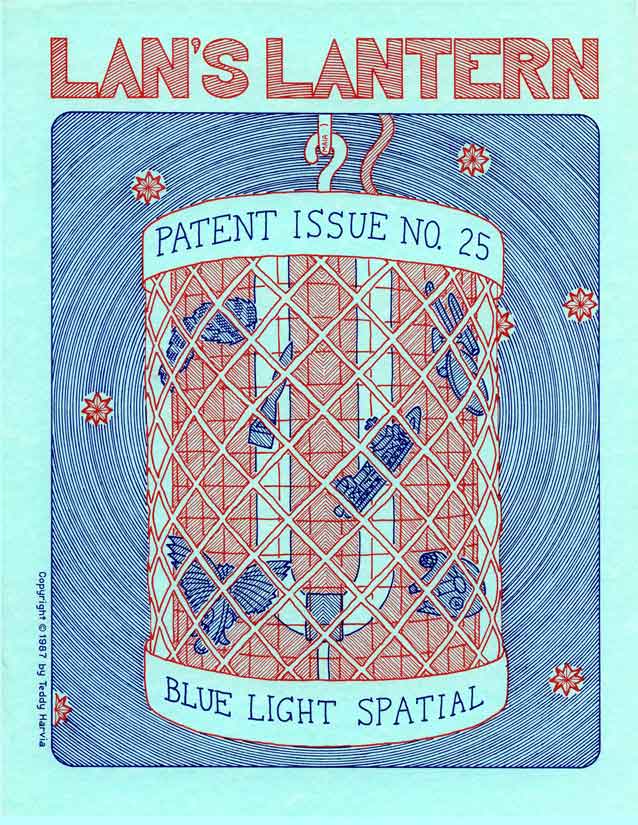
Asked whether there should be an accent mark over the i, Teddy Harvia said “That’s the Spanish side of the family. We on the Finnish side don’t use one.” He has won five Hugos as Best Fanartist, the Science Fiction Chronicle readers’ poll four times, and the Southern Fandom Confederation’s Rebel Award. He was long associated with the fanzine Mimosa. Some of his creatures, like Chat the Fourth Fannish Ghod (the h is an age-old, or h-old, touch of comedy in fanzines), and the Wing Nuts, re-appear now and then in his work. Other creatures we know not if we shall see again. Keep watching the stars.


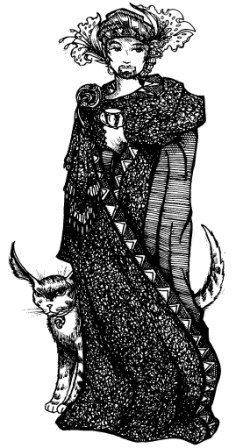
Sue Mason is celebrated for her work in the British fanzine PLOKTA, “the journal of superfluous technology” (PLOKTA an acronym for Press Lots Of Keys To Abort). Besides pen and ink, she does pyrography, burning designs into a surface, usually wood, leather, or paper. She has won two Hugos (a finalist nine times) and seven Novas as Best Fanartist. In 2000 she was the Trans-Atlantic Fan Fund (TAFF) delegate, attending the 58th Worldcon, and she was Master of Ceremonies for the Masquerade (our on-stage costume competition) at the 63rd. The Minnesota Science Fiction Society published her chapbook I Want to Be a Celtic Death Goddess When I Grow Up.


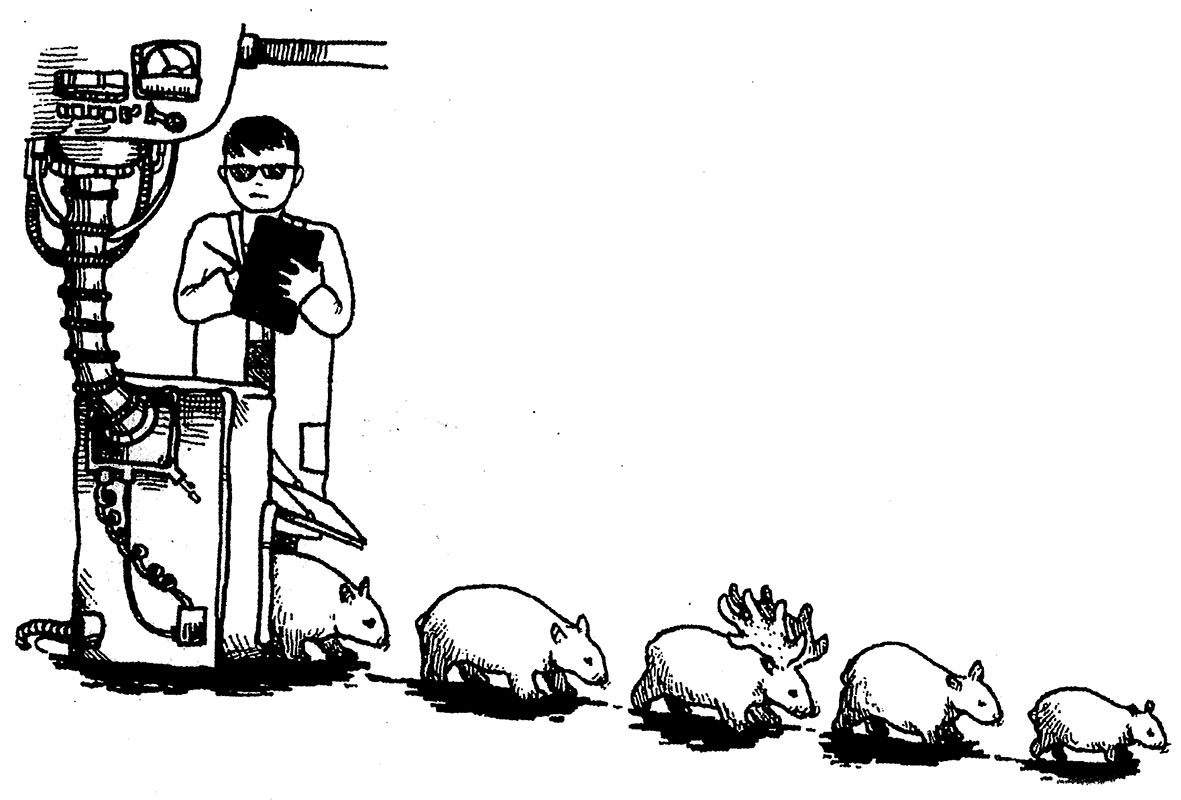
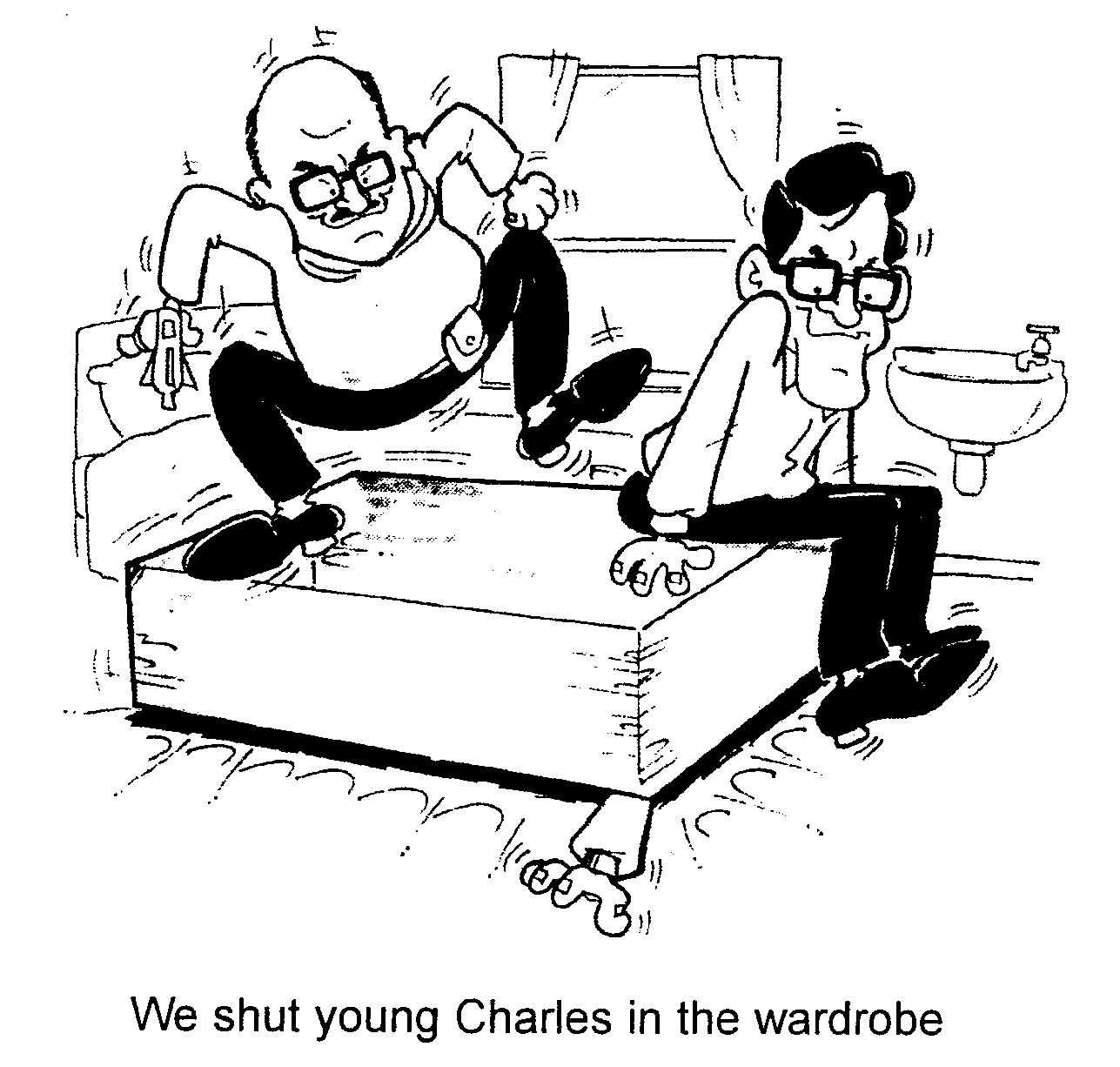
Quick and prolific – some artists are, some aren’t. Jim Barker was a Guest of Honour at the 31st Eastercon (U.K. national convention, held Easter weekend). In 1979 he and Chris Evans published The Best of Elmer T. Hack, a collection of Barker comic strips from Vector recording the history of a fictional SF author, many of which featured cameos of real pros. He has been a Hugo finalist as Best Fanartist and won a Checkpoint poll. A member of the Cartoonists’ Club of Great Britain, he says “you have to draw the line somewhere.”

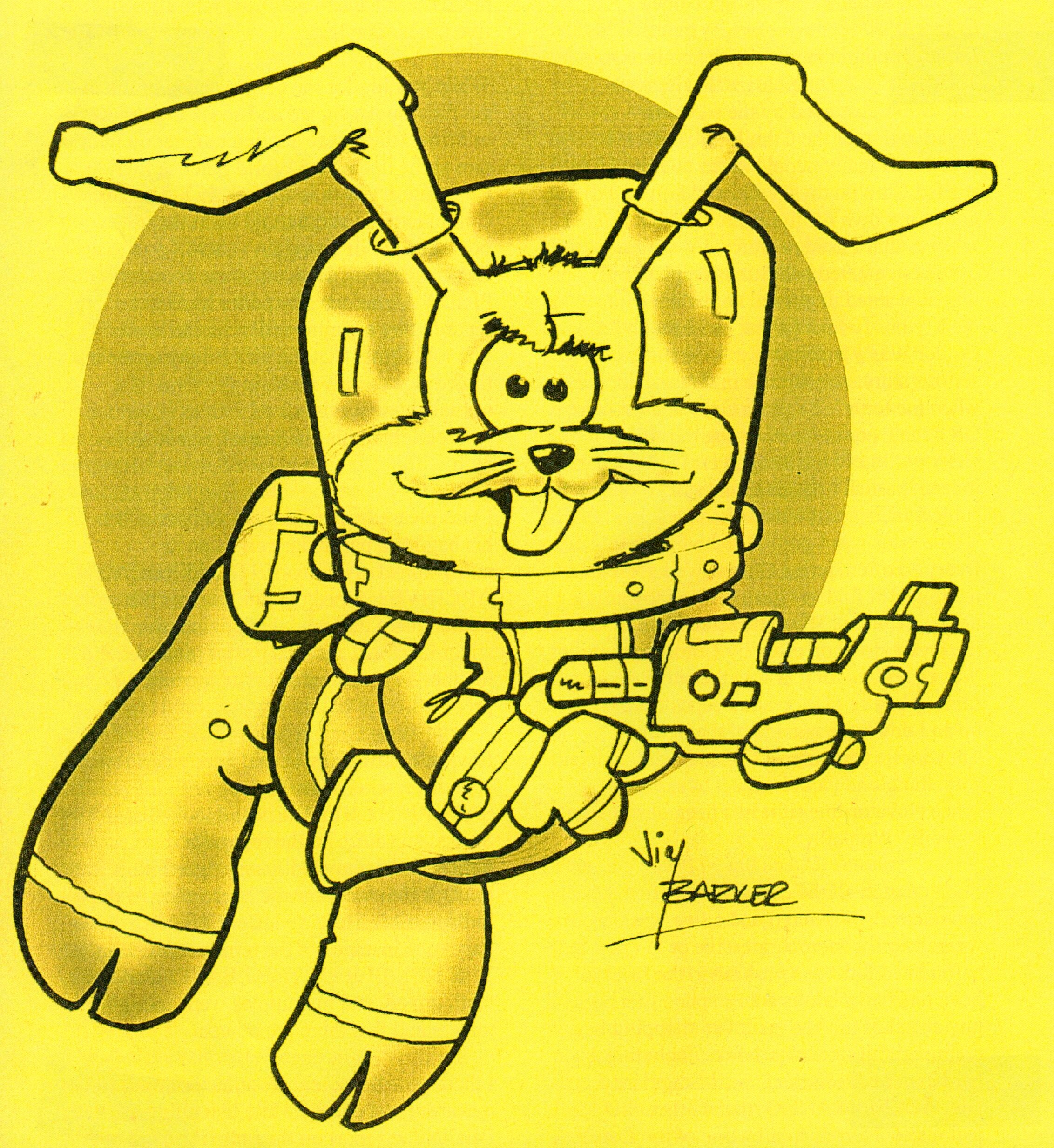

Ross Chamberlain illustrated the 1971 edition of The Enchanted Duplicator and did cover art for the three-volume Fanhistorica Press edition of A Wealth of Fable. He has been in the apas (amateur press associations) APA-F, APA-Q, APA-V, FAPA, and TAPS. While in New York he was a member of the Fanoclasts, FIStFA, and the Brooklyn Insurgents. Going west, he became one of the Las Vegrants (interlingually redundant, sorry). He was masterly with mimeograph stylus and shading plate, since Photoshop arrived he has used that too.


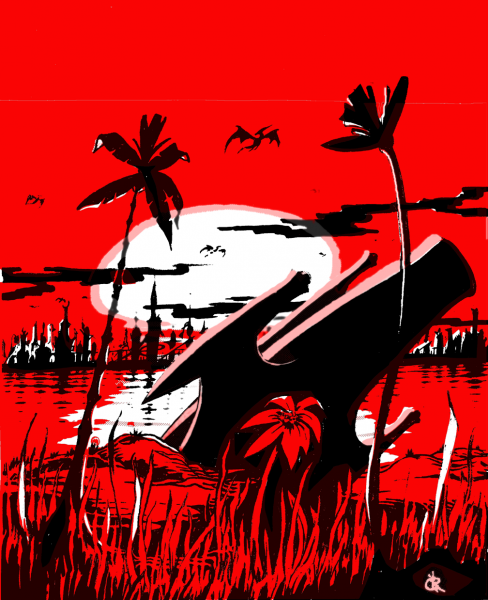
For 2011 the judges decided upon giving the Award to D West. However, he declined. The judges therefore determined there would be no 2011 Rotsler Award.
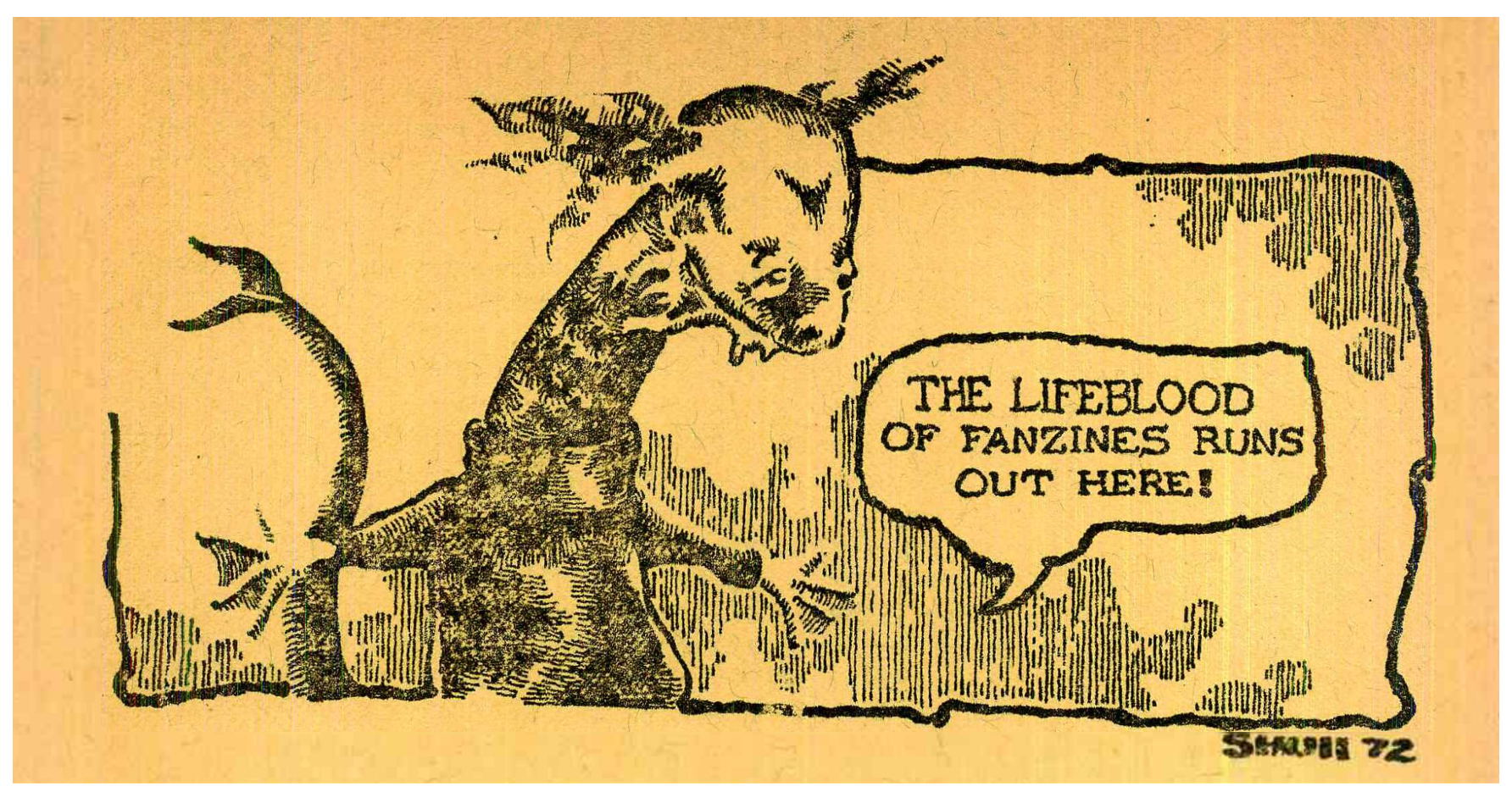
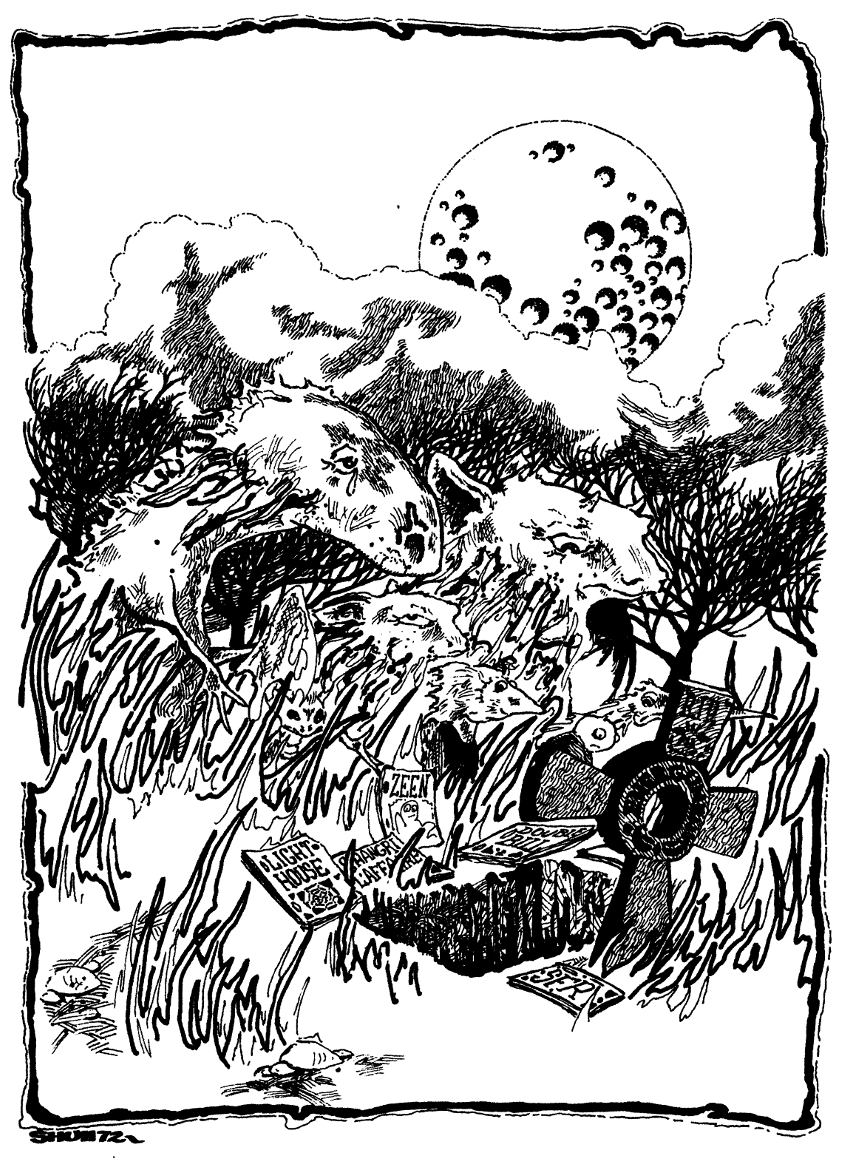
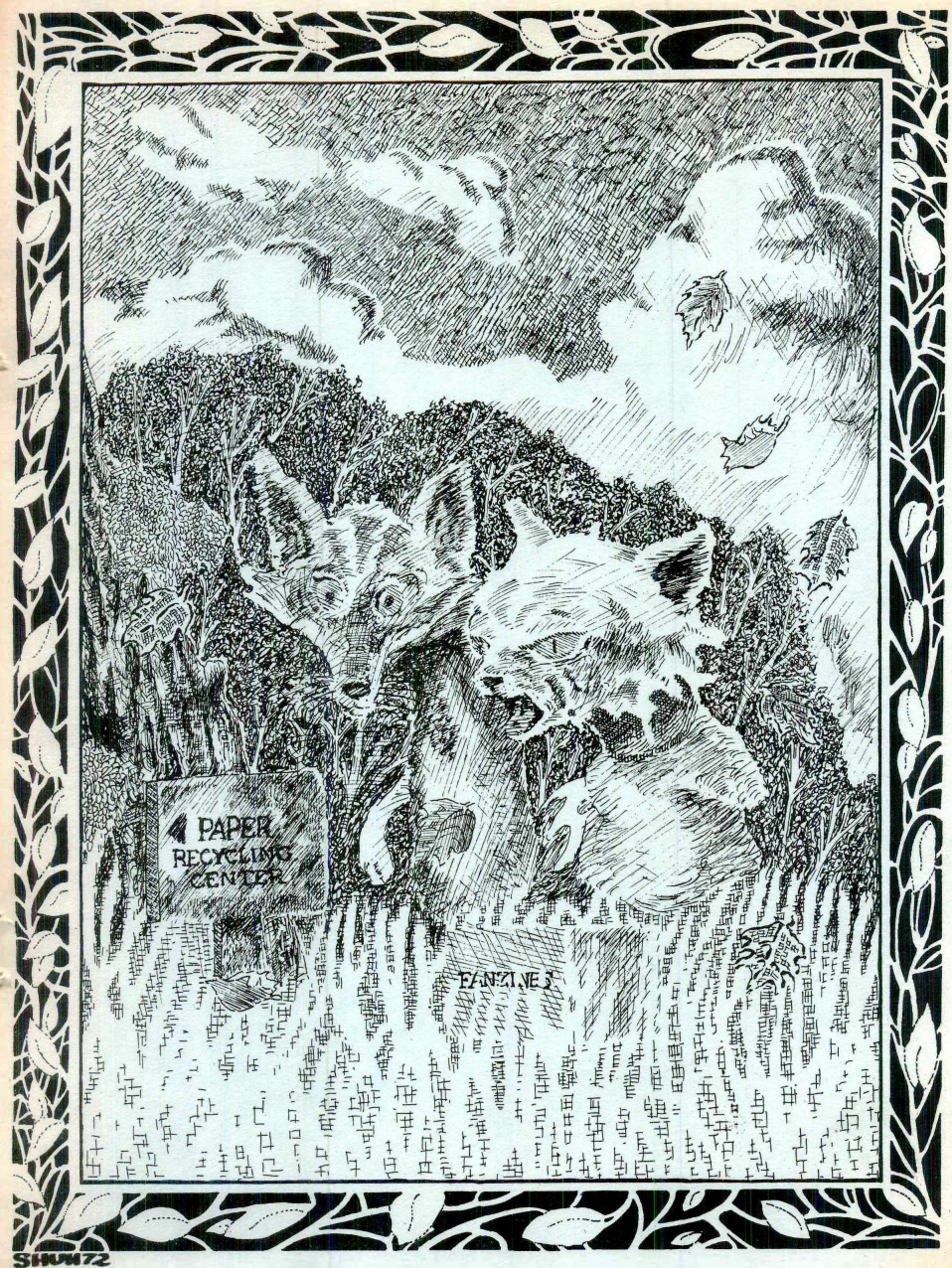
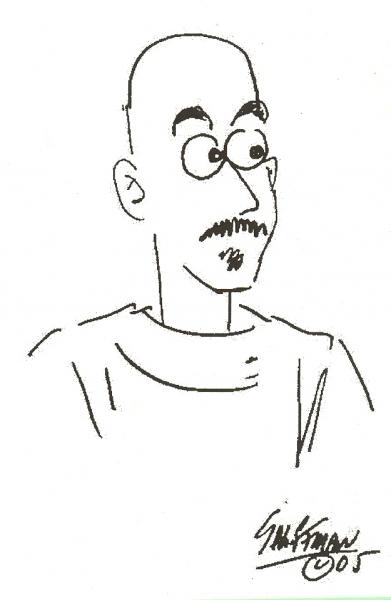
Stu Shiffman (1954-2014) was the 1981 Trans-Atlantic Fan Fund delegate. Then dwelling in New York, he later made the Great Northwest Pilgrimage to become a resident of Seattle.
Shiffman had eleven Hugo Award nominations as Best Fanartist. He was a Guest of Honor at Minicon XX and Wiscon XII, and had a recipe in The Bakery Men Don’t See (1991). Historical interests and strange animals were often involved in his drawings. Besides science fiction, he was a fan of folk music and Sherlock Holmes. He was also a judge of the Sidewise Awards.

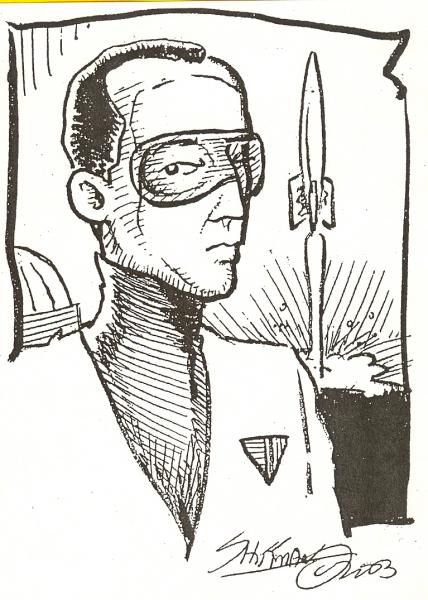
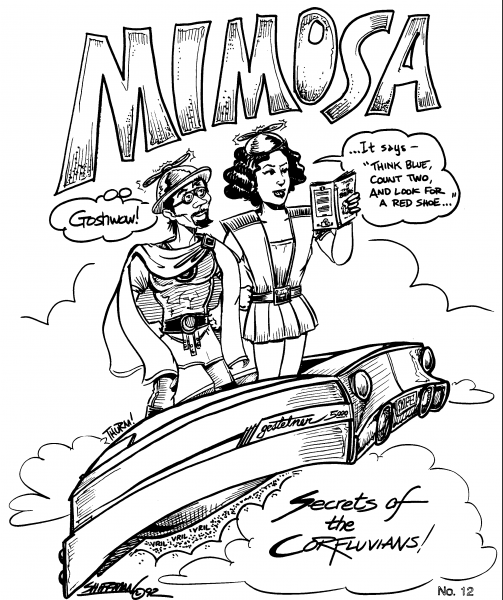
Dan Steffan, of Portland, Oregon, won the Readercon award for the design of Science Fiction Eye. As of July 2010 he has won the Fanzine Activity Achievement (FAAn) award as Best Fanartist four times, and has had one Hugo Award nomination. He was the Trans-Atlantic Fan Fund delegate in 1995.
His imagination, his marshalling of detail, and his poignant satire have kept his reputation high for decades. His work is always part of any conversation about excellence in fanzines. (You’ll see he sometimes signs his name on three lines, DAN STEF FAN. Hugo Gernsback’s old word scientifiction is still with us, stf for short, pronounced “stef.”)


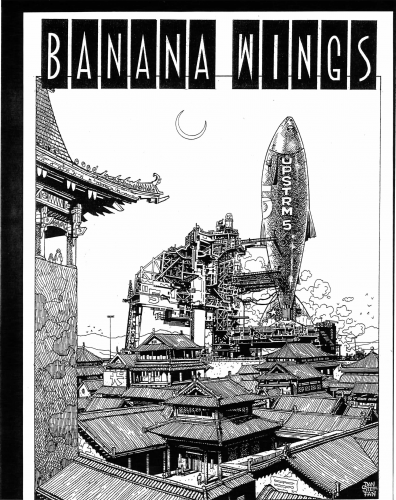

Toronto-area artist Taral Wayne has been nominated seven times for a Hugo Award as Best Fanartist. Writing is also an art; he is a noted fanwriter. History may also be an art; he is a noted fanhistorian. He was Fan Guest of Honour at Anticipation, the 67th World Science Fiction Convention, in Montréal. However, none of these interesting facts is within the scope of the Rotsler.
Taral’s work is by turns serious, sexy, and satirical, with a fluent line and strong composition. At home with space equipment and strange creatures, he was also drawing anthropomorphic animals long before most in North America had heard of animé or manga.


Terry Jeeves (1922-2011) was of First Fandom, that happy band who became active fans at least as early as the first World Science Fiction Convention (1939). He wrote for fanzines, he sent drawings to fanzines; for over forty years he published his own fanzine Erg. He had a way with people, creatures, and machines. They may appear together. Some are the humanoids we have come to know as Soggies. Al Capp fans say these resemble Shmoos. Perhaps. As with many fanartists, Jeeves’ work has a whimsical touch. He could be comic, satiric, poignant; often understated. He was an Englishman.


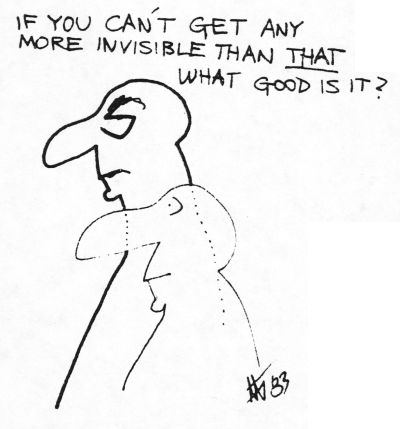
Alexis Gilliland has a distinctive witty style that has long enriched amateur publications in the science fiction community.
The one color piece included is from Bruce Pelz’ Fantasy Showcase Tarot Deck (1980). Each card was by a different fan or pro artist, some majestic, some earthy, some wry. Some of the other Rotsler winners did these too. Gilliland’s is in a voice quite unlike what he is mostly known for.
Gilliland has also published s-f, but his pro activity is not within the scope of the Rotsler Award. In fact he has four times won the Hugo Award as Best Fan Artist, but that is not within the scope of the Rotsler either. The Hugos, highest achievement award in the s-f community, are given for work in the previous calendar year. The Rotsler is for long-time wonder-working. And while some Rotsler winners have won Hugos, some have never been nominated for them.

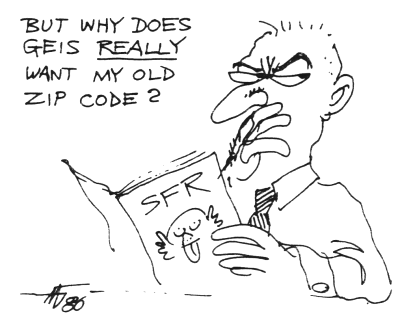
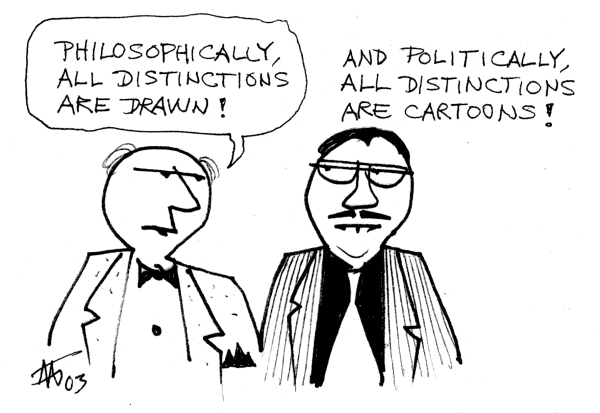
Marc Schirmeiser (1958- ) also known as “Schirm”, found science fiction fandom and the Los Angeles Science Fantasy Society (LASFS) in the early 1970s and immediately became actively involved. Known for his eccentric style, Schirm has a Crumb-like fascination with an earlier era – almost a throwback to the hyperkinetic art of the 1930s – a style described by Taral as “one part E.C. Segar, one part Will Eisner, and one part Spike Milligan.”
His cartoons have appeared extensively in science fiction fanzines, furry fanzines (an area of publishing where he was one of the founders), and many other places. He contributed the Five of Wands to Bruce Pelz’s Fantasy Showcase Tarot Deck. He drew chapter illustrations for Bill Warren’s Keep Watching the Skies! American Science Fiction Movies of the Fifties. Schirm was a founder of Rowbrazzle, the cartoonist’s apa.
He’s also worked professionally doing storyboards for animation and provided inking for the Teenage Mutant Ninja Turtles comics. He even designed South Pasadena’s 1999 Rose Parade float.


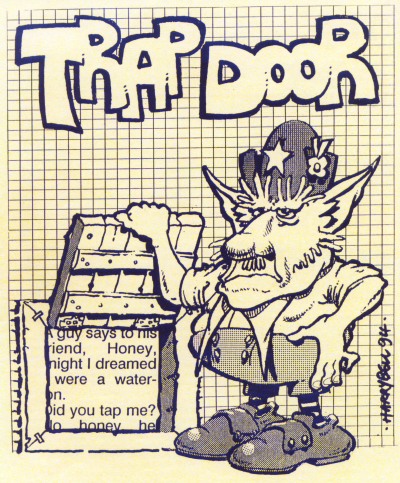
Harry Bell (1947- ) was at his most prolific in the 1970s, winning the Checkpoint Poll as Best Fan Artist seven times, as well as his first FAAn Award (1977). He was Fan Guest Of Honor at Seacon, the 1979 Worldcon, and also was a finalist that year for the Best Fan Artist Hugo. His full-page art could be incredibly complex and richly textured, mixing cross-hatch, and wood grain-like patterns, to surround his caricatures with impenetrable jungles.
For his cartoons, Harry loved googly eyes, wild hair, floppy hats, knobby knees, long noses, leering grins, spotted aliens, and musical devices with fiendishly tangled cables. To that unparalleled drawing skill, he added an understanding of fans and fandom and an incisive sense of humor that could be used to deflate fannish pomposity or frame poignant moments in fan experience.
After a time away from fandom, during which he studied fine art and began making beautiful paintings, he was lured back in around 2003 by the activity in fannish e-lists, soon founding one of his own, InTheBar. When Harry resumed contributing to fanzines, he won three more FAAn Awards (2014, 2016, 2017) for his fanzine cover art.

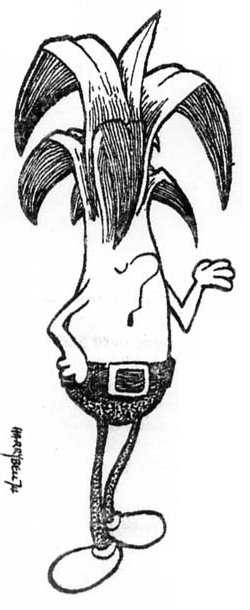
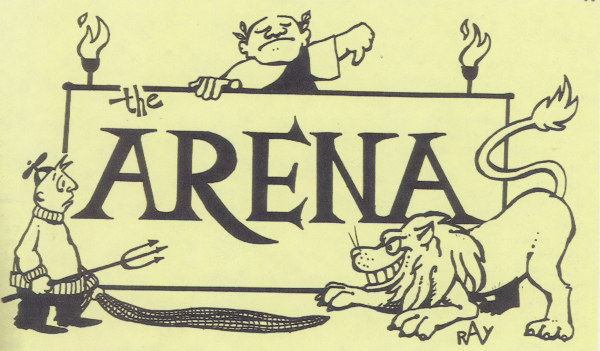
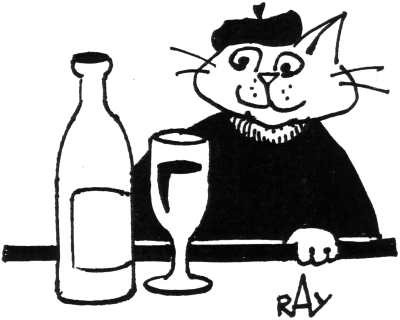
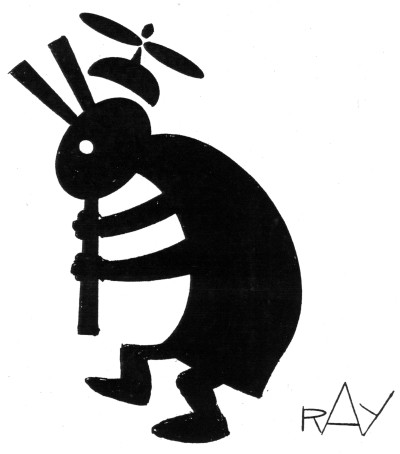
Ray Faraday Nelson (1931-2022), as a teenager, already had a comic strip published in the local paper before ever he started cartooning for fanzines. In the Fifties, he was known for broad caricatures of fans and captioned humor. Other times his roots in pulp magazine illustrations showed in the form of Amazon women, tripod spaceships, and bug-eyed monsters. But over time, as the fanzine medium grew more sophisticated, so did Ray’s style.
In addition, he was the inventor of the propeller beanie, the iconic headgear that came to signify SF fans in the work of many other cartoonists. Ray also was a noted science fiction writer, with many published novels and short stories.

Kurt Erichsen is an acclaimed fan artist who’s also famed as the creator of the syndicated LGBT-themed comic strip Murphy’s Manor which ran from 1981 until 2008.
His work is crisp, precise, and well designed, with inked lines that seem to buzz with energy. Some of his best work is sent to fans in his annual Christmas Cards, and in his own fanzine, Endeavor.
In 1985 and 1987 Kurt was recognized by the Gay/Lesbian Press Association for Outstanding Achievement in Illustration. In 2023 he won the United Fanzine Organization Award.
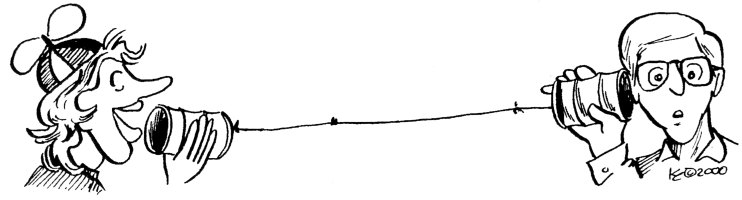



Brad Foster (1955- ) is both a professional and fan artist, and entrepreneur of the Jabberwocky Graphix publishing empire. His fannish side emerged while studying architecture at Texas A&M, where he also drew posters for the student science fiction club, Cepheid Variable, as well as a fantastical comic strip, “Gigags,” for the campus newspaper.
Brad’s compositions are often filled with detailed activity. Brad’s taste runs to humorous, whimsical subjects. People in floppy hats, robots with big soulful eyes, gizmos that would make Rube Goldberg blink and trees like giant broccoli stalks. Things generally seem to be made of foam or rubber, and straight lines may sometimes seem a topological impossibility. Yet mechanically perfect perspectives with ruler-perfect vanishing points are another trademark. Likewise, intricate lines and stipples taking the forms of robots, dragons, barbarian men, beautiful women, fanciful gnomes, mischievous elves, impossible airplanes, ornate spaceships, conglomerations of gears, extraterrestrial critters, human/animal hybrids, mechanized armadillos, and lots and lots of cats.
He’s been nominated for the Hugo Award 27 times, winning eight. He won the 1989 Chesley Award (for his monochrome “Mechanical Owl”), and he’s won the Science Fiction Chronicle “Best Fan Artist” poll five times.

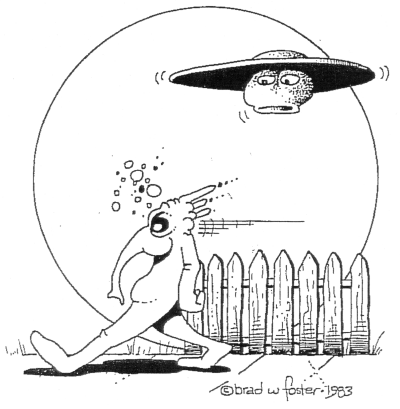

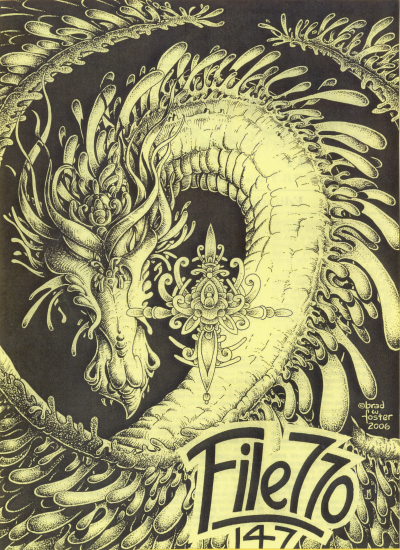
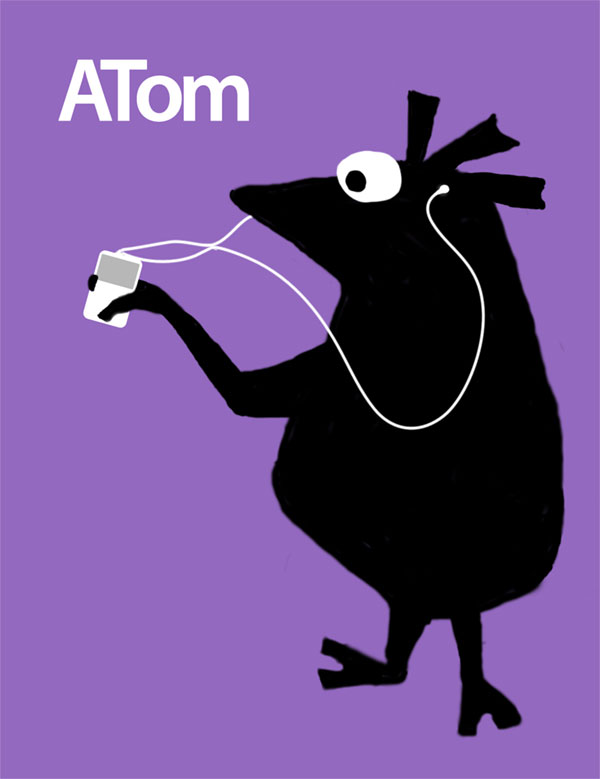
British fanartist Arthur Thomson (1927-1990), who signed his artwork ATom, was the dominant cartoonist of a particularly golden age of fandom. He became active in fandom in the mid-1950s, when he first heard about a local science fiction club in Surrey, England and began attending meetings. In 1954 Thomson ended his first letter to legendary Irish fan Walt Willis, co-editor of Hyphen, with a cartoon footnote. Willis’s encouragement inspired ATom to produce an avalanche of cartoons. Over the next 7 years ATom’s fanzine illos came to personify the faanish spirit of the age. Willis called him “fandom’s Art Editor.”
Most of ATom’s early fanart was drawn with a steel stylus directly on stencil. The ATom Anthology was published in May 1961 by Ella Parker and featured 108 pages of ATom art. It was mimeographed and ATom hand-cut all the stencils. It won the Skyrack fan poll award as best British fanzine for 1961. Over the years, he was nominated for the Best Fan Artist Hugo Award five times. In 1964, Thomson won the Trans-Atlantic Fan Fun (TAFF) and was heralded for his trip report/fanzine ATom Abroad.
Cartoonists are known by their stock images: in ATom’s case, bug-eyed aliens with blunderbuss ray-guns, pear-shaped beanie-wearing fans, “curly monsters”, trenchcoated agents of the Goon Defective Agency, wrecked spaceships, and alien militarists in elaborate uniforms. ATom’s rich sense of humor expressed in a personal graphic style married perfectly with the sophisticated, ironic tone of Irish Fandom in the early 1960’s.
Note: After the 2000 Rotsler was given to Atom (1927-1990), it was decided not to give the Rotsler posthumously again.
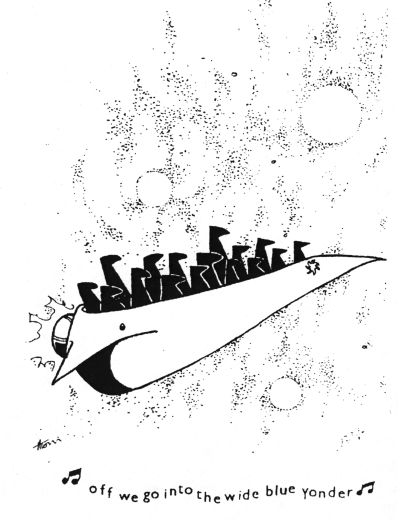
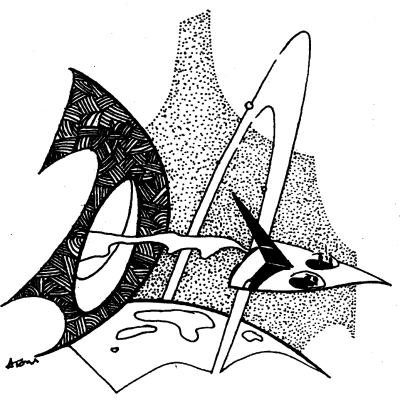

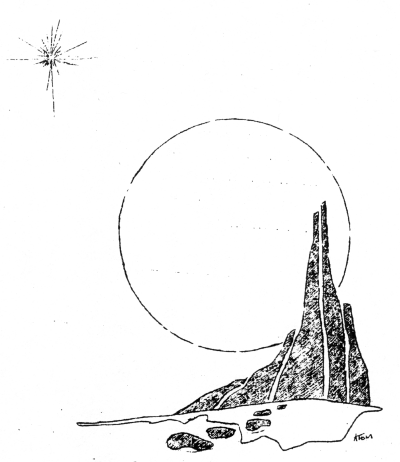
Grant Canfield’s graphic cartoon style graced the covers and interiors of dozens of the best fanzines of the 1970s and 1980s. He was nominated seven times for the Best Fanartist Hugo (and is someone Bill Rotsler himself said should have won it.) Grant’s art first appeared in Crossroads, Science Fiction Review and Beabohema. About the same time he started selling professional gag cartoons to national magazines, getting published in the Saturday Evening Post, Good Housekeeping, Boys Life, Parade, The National Enquirer and many men’s magazines.
As an architectural artist, it is almost a trademark of Canfield’s to make generous use of straightedge, lettering guides, lay-down graphics (such as brick patterns, sparkles, cross-hatching, or flagstones), or other tools of his profession. His line has the authority of a quality set of 00 to 09 drafting pens. One of his specialties is the absurd machine, or robot, plausible but clearly pointless. Canfield is also adept at ogres, trolls, goons, oafs, and monstrosities of all kinds.
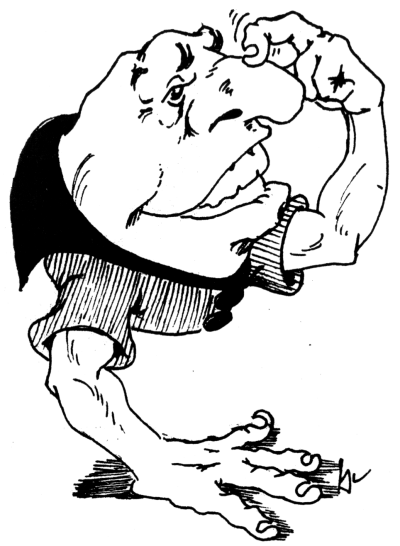
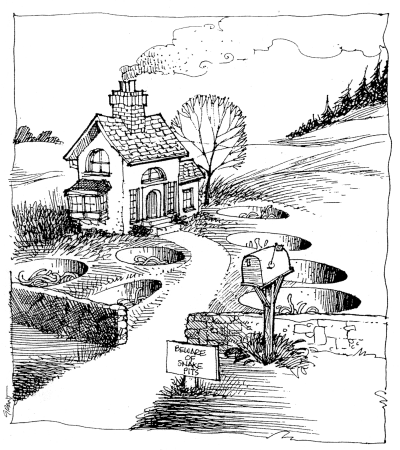
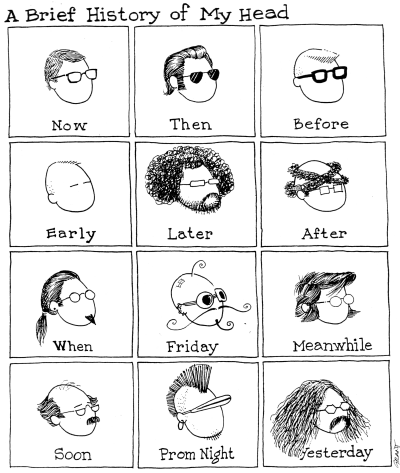
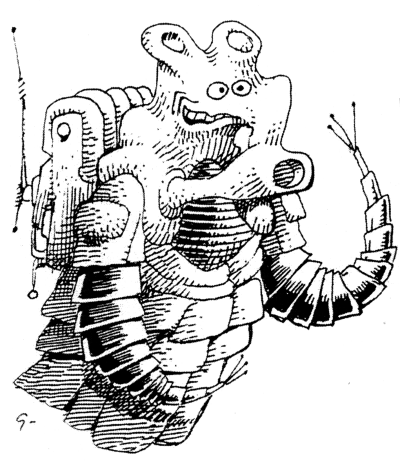
Steve Stiles (1943-2020) was the inaugural winner of the Rotsler Award, a career honor for fan artists. Steve’s first cartoon for a fanzine appeared in Cry of the Nameless #150 (1961). In later years his mature artistic style was described by Taral as coming from the heart of the EC comic book tradition, with bold lines, striking use of black space, and a sense of drama that could have been lifted straight from German Expressionist film. He attended the School of Visual Arts in Manhattan partly because so many EC Comics artists had gone there. All the while, Steve worked as a professional artist in virtually every medium, from comic strips to modern abstracts. He earned the first of his 17 Best Fan Artist Hugo nominations in 1967, winning the award in 2016. He won 15 FAAn Awards, presented by fanzine fans at Corflu.
It was only appropriate that Steve created the iconic cover for Harry Warner’s fanhistory of the Fifties, A Wealth of Fable, for if no fanzine was complete without a Warner letter of comment, no faned felt completely fannish without a Stiles cover or cartoons. His first published comic work appeared in New York’s underground comics pages, The Gothic Blimp Works, in 1968. Steve was best-known for the post-apocalyptic dinosaur-filled future of Xenozoic Tales, which he drew for eight years. And he drew for titles such as Death Rattle, Bizarre Sex, and Anarchy Comics from underground publishers like Kitchen Sink and Last Gasp. Steve also did kid-friendly work, such as The Mighty Morphin Power Rangers and Royal Roy. During the same period, he worked as a penciller for Marvel’s British publications for five years, then later did pencils and inks for Hamilton Comics, Malibu, Topps, and Star.
In what might have become the crowning achievement of his pro career, Steve was picked as the artist for a 1990s revival of the Li’l Abner comic strip, however the project did not go through.


